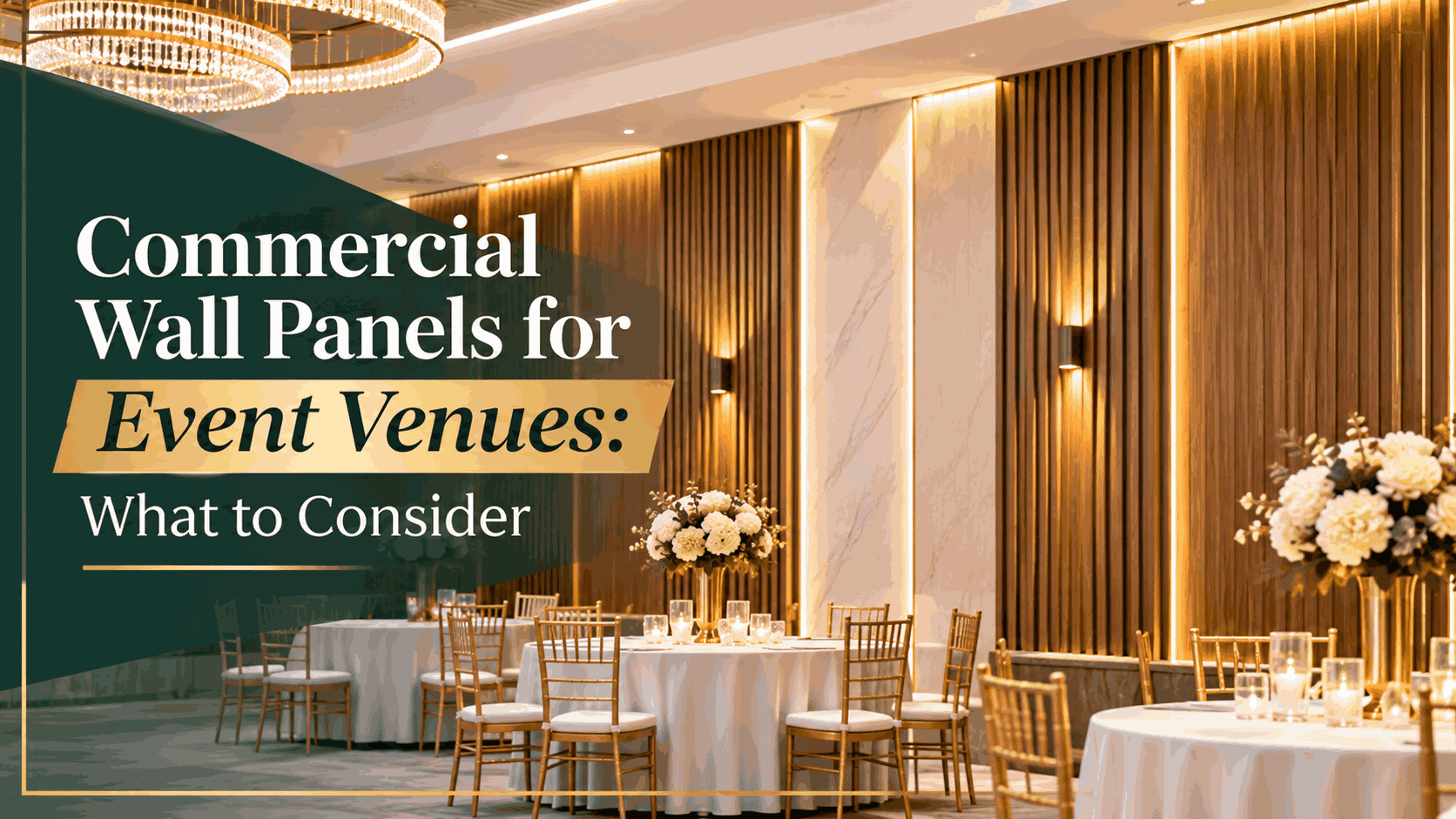
Commercial Wall Panels for Event Venues: What to Consider
Walk into any event venue and the walls tell you a lot. Scuffed corners and chipped paint make a room feel tired, even when the chairs and tables are new. Nice, clean panels make the same room feel put together. That’s why more owners across the USA are looking at commercial wall panels instead of repainting every year. But there’s a lot to think about before you pick any. This guide covers what matters, so you don’t end up with panels that look great on day one and rough by month six. If you want panels made for your room, take a look at our custom wall panels.
TL;DR
Key Takeaways
- Why Panels: Commercial wall panels are built for busy spaces, so they hold up better than paint.
- Design and Size: Plan the design and size around your real walls, not a catalog photo.
- Materials: Pick materials for how each wall gets used.
- Cleaning: Ask how a panel gets cleaned before you buy it.
- Guest Areas: Use tougher panels in spots guests touch and bump.
- Installation: Good installation matters as much as the panel itself.
What Are Commercial Wall Panels?
Wall panels are sheets or boards that cover a wall. They can be wood, laminate, metal, fabric wrapped or made of a 3D textured material. The “commercial” part means they’re made for places with lots of people, like hotels, banquet halls and ballrooms. They’re built to handle bumps, cleaning and daily use, which a regular home wall finish isn’t made for.
Some panels are mostly for looks. Others also help with sound or protect the wall underneath. A lot of them do more than one job.
Why Event Venues Use Them
Event venues take a lot of abuse. Chairs hit the walls, guests lean on them and decorations get taped up and pulled off at every event. Paint chips and scuffs show up fast, and touch ups never match.
Panels fix a few problems at once. They add texture and depth, so a plain room feels finished. They cover small flaws and uneven walls. And they usually last longer than paint, which means less time with a wall closed for repairs. Guests also take a ton of photos at events, and a nice panel wall makes a much better backdrop than flat white paint.
Design and Size
Start with your actual walls. Measure the height and length, and mark doors, windows, outlets, vents and corners. These change how panels fit. A wall with lots of breaks needs more cutting and planning than a clean, flat one.
Think about the room too. Big, bold panels look great on tall walls but can feel heavy on short ones. Vertical lines can make a ceiling feel taller. Wide horizontal patterns can make a narrow room feel wider.
You also don’t need to cover every wall. One or two feature walls, like behind the stage or near the entrance, can change the whole room. Pick a style that matches the rest of your venue, like the floors, lights and furniture. Panels that clash with everything look out of place no matter how nice they are.
Materials
Here’s a quick look at common options and where each one fits.
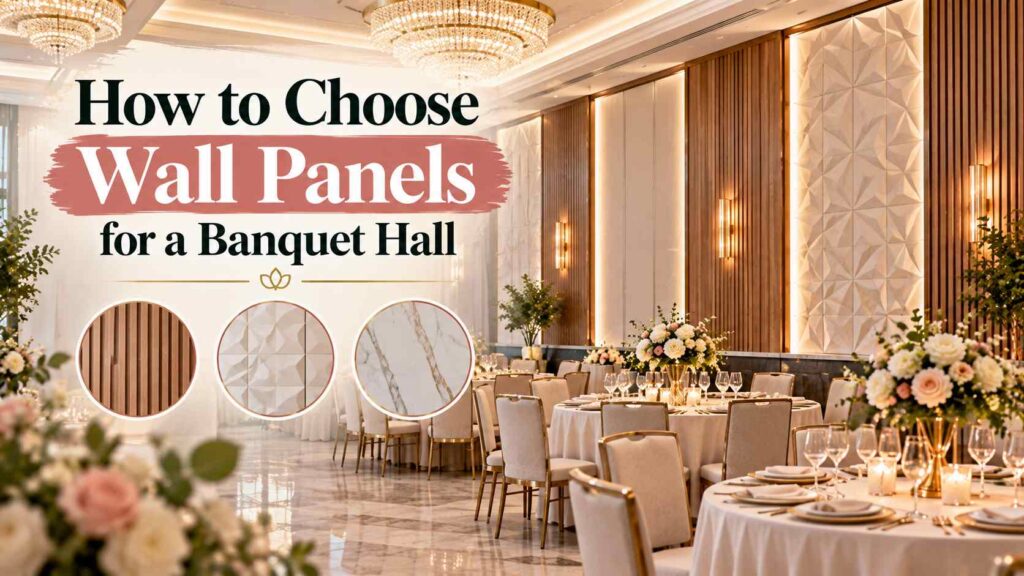
Wood and wood veneer gives a warm, upscale feel. It works well in quieter areas but needs more care around water and heavy bumps.
Laminate comes in lots of colors, wood looks and stone looks. It wipes clean fast and costs less than real wood, so it’s popular for busy venues.
3D textured panels have raised patterns that catch the light. They make great feature walls, but deep textures can hold dust.
Acoustic panels soak up sound. Big venues can echo, and these help conversations feel easier.
Metal accents add a sleek, modern touch. They’re tough, but fingerprints can show, so they often work best as trim or small accents.
Whatever you pick, ask how it handles spills, scuffs and cleaning. A great sample in a showroom can act very differently in a busy venue.
Durability and Cleaning
This is where a lot of owners get surprised. A panel can look amazing and still be a pain to keep clean. Smooth, sealed surfaces wipe down fastest. Deep textures and open grain can trap dust and grease.
Ask a few simple questions before you buy. How does it handle scuffs and scratches? What cleaners are safe on it? Can one damaged panel be swapped without replacing the whole wall? Your staff will deal with these panels every week, so easy care saves real time.
Also check the rules. Commercial buildings often have fire and safety requirements for wall materials, and they change by city and state. Ask early so you don’t have to tear something out later.
Guest Facing Areas
Not every wall needs the same panel. Think about where guests actually go and what they touch.
Entrance and lobby. This is the first thing people see. A nice panel wall here sets the mood right away. It also takes a lot of bumps from bags and crowds, so pick something tough.
Bar and buffet areas. Lines form here, guests lean, and carts and trays pass by all night. Use sturdier finishes with sealed edges.
Stage or head table wall. This one is mostly for looks and photos, so you can go with a more detailed design. Soft lighting makes textured panels look even better.
Hallways and restrooms. Busy and often forgotten. Tougher, easy clean panels pay off here.
Photo spots. Guests love a good backdrop. A feature wall near the dance floor or entrance gives them one, and it shows off your venue every time someone posts a picture.
A good trick is to mix finishes. Use a durable one on the lower part of busy walls and a nicer one above. The part people bump stays protected, and the part people look at stays pretty.
Installation
Even a great panel looks cheap when it’s put up wrong. Gaps, uneven seams, weak mounting and crooked lines can ruin good materials.
Before you order, ask who installs the panels and how they handle corners, outlets and edges. Ask how long it takes and if the work can happen in a slower stretch, so you don’t lose bookings. Also ask if the wall needs prep first, since bumpy or damp walls can cause problems later.
Plan the lighting at the same time. Soft accent lights along a textured wall show off the depth, while harsh overhead lights can flatten it.
Custom Options
Standard panels come in set sizes and styles. They cost less and work fine for simple, straight walls. But many venues have odd corners, tall ceilings or a look they want to match. That’s where custom panels help.
Custom panels are made for your exact walls. You can pick the size, finish and pattern, and they fit cleaner with fewer awkward gaps. They also let you match your wall panels to other pieces in the room, like a bar or buffet counter, so the whole venue feels planned. Our team designs, builds and installs custom wall panels for event venues across the USA. Tell us about your space and we’ll help you plan it.
Frequently Asked Questions
What are commercial wall panels?
They’re wall coverings made for busy places like hotels, banquet halls and event venues. They handle bumps, cleaning and daily use better than regular paint.
Do I need to cover every wall in my venue?
No. One or two feature walls can change the whole room. Start with the spots guests see most.
What material is best for event venue wall panels?
It depends on how the wall is used. Laminate and sealed panels work well in busy areas, and wood looks great in quieter spots.
Are wall panels better than paint?
In busy venues, usually yes. Panels hold up better to bumps and scuffs and add texture that paint can’t.
How do I clean commercial wall panels?
Smooth, sealed panels usually wipe clean with a damp cloth. Textured ones may need a soft brush. Always ask what cleaners are safe for your finish.
Can wall panels help with noise?
Some can. Acoustic panels soak up sound and cut down on echo in big rooms.
Should I choose custom or standard panels?
Standard works for simple walls. Custom is better for odd shapes, special looks or heavy use.