25 Wedding Reception Bar Ideas Your Guests Will Love
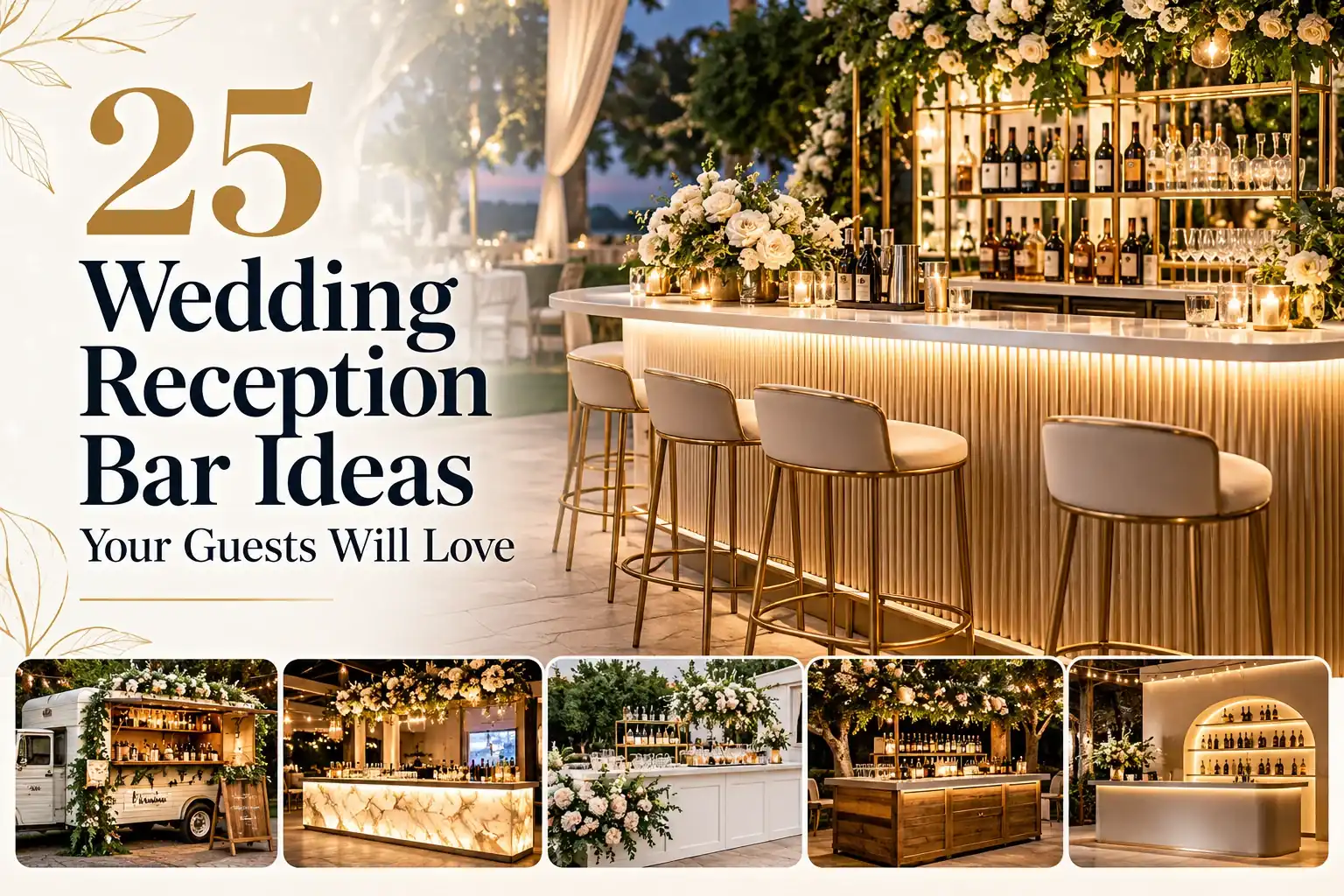
Your wedding bar is one of the first things guests notice once cocktail hour starts. It kind of sets the mood for the rest of the night, honestly. You don’t need a crazy budget to make it look good either, you just need to pick a style that fits your venue. We looked at a bunch of real wedding bar setups and pulled together 25 ideas, some classic, some you probably haven’t seen on other wedding blogs.
TL;DR
Key Takeaways
- Choose a wedding bar style that fits your venue, wedding theme, and overall space.
- For larger weddings, use a double-sided or four-sided bar to reduce lines and improve guest flow.
- Consider options like vintage truck bars, built-in lit bars, mocktail bars, and matched interior bars.
- Plan the bar around guest movement and available space, especially near walkways and the dance floor.
- Plan for about 1 drink per guest per hour and 1 bartender for every 50–75 guests.
- A custom or built-in bar counter can be a practical long-term option for venues that host events regularly.
25 Wedding Bar Styles to Choose From
1. The Monochrome Bar
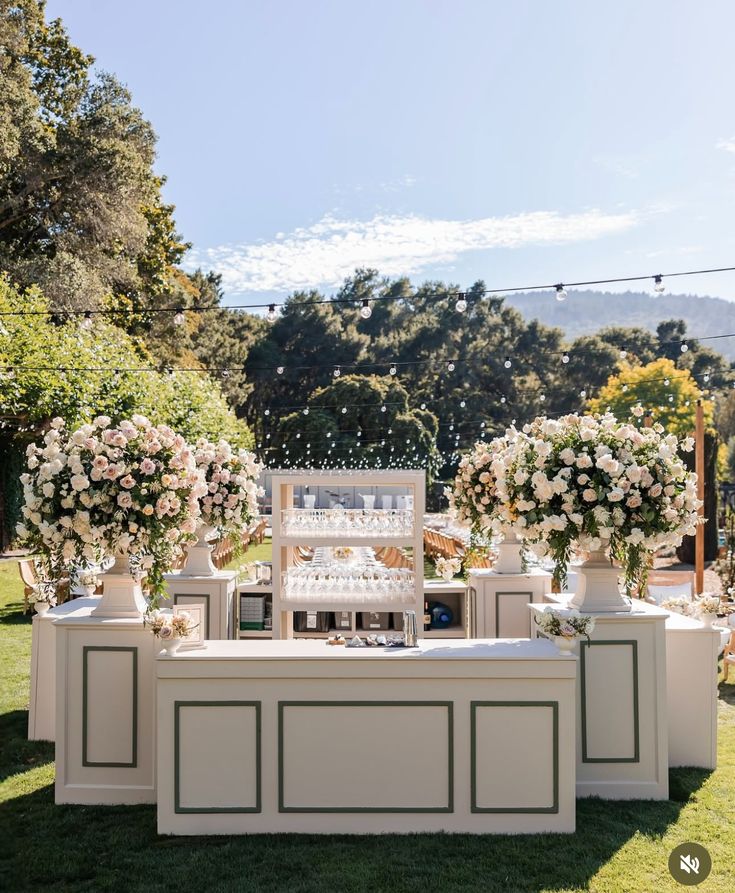
If your wedding colors are mostly white, cream or blush, just keep the bar in that same range. It looks really clean in photos and it works with pretty much any venue.
2. The Bold Pattern Bar
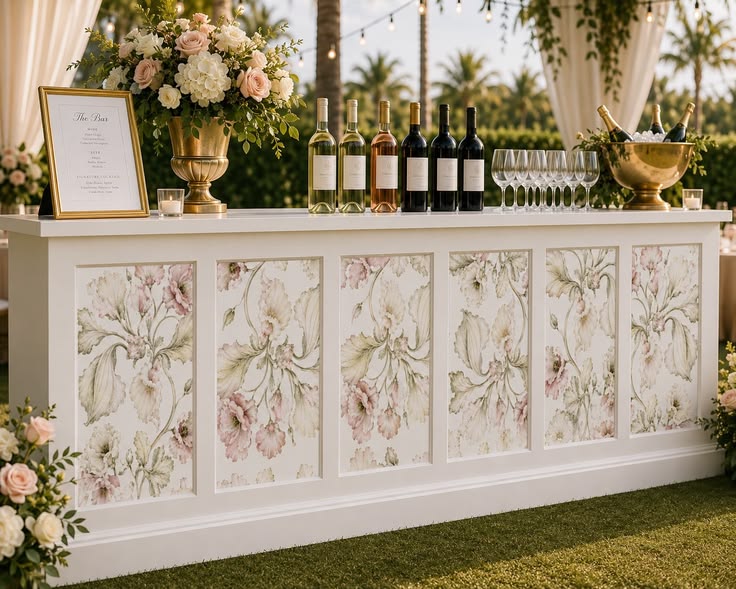
Some couples want the bar to actually stand out instead of blending in. A bold printed skirt around the base, like a floral or geometric print, turns it into its own little piece of decor. Works great outdoors especially.
3. The Double Sided Bar
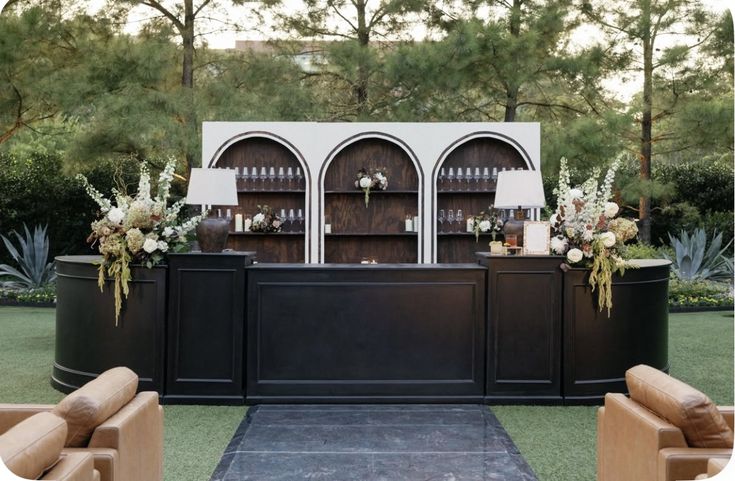
If you’ve got a bigger guest list, a bar with service on both sides cuts the wait time down a lot. Nobody wants to lose half of cocktail hour standing in line.
4. The Four Sided Bar
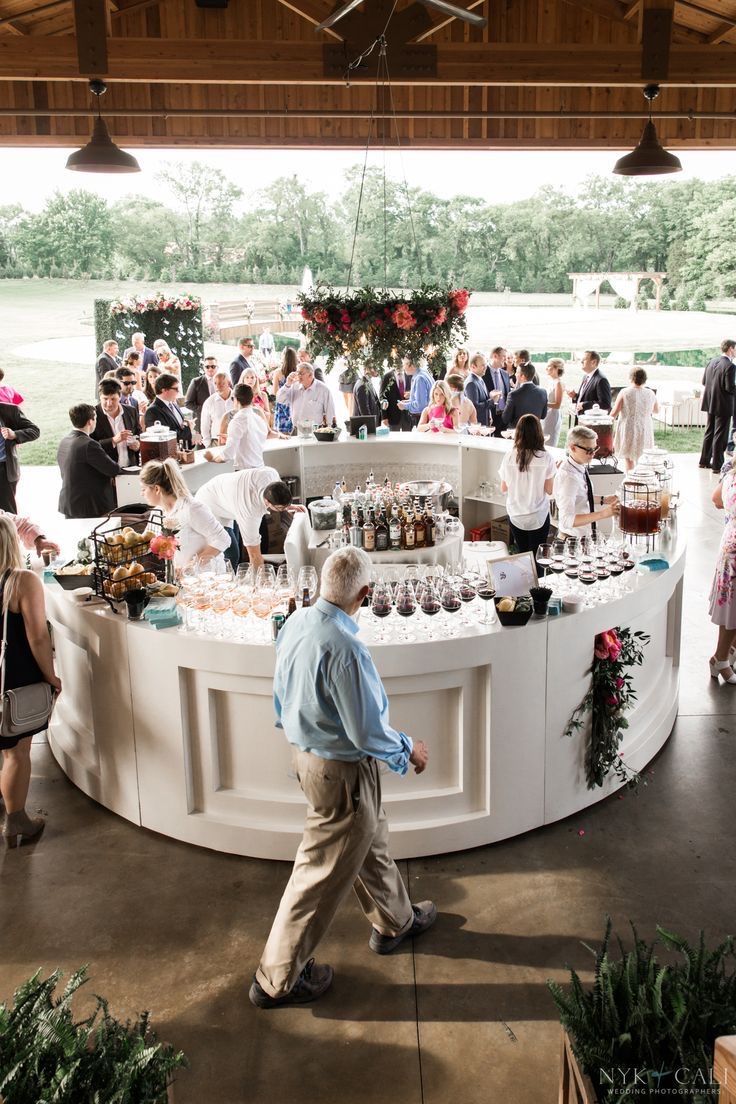
For really big weddings, a four sided bar keeps four lines moving at once. It takes up more room, so it works best in bigger spaces, but it really does speed things up.
5. The Vintage Cart Bar
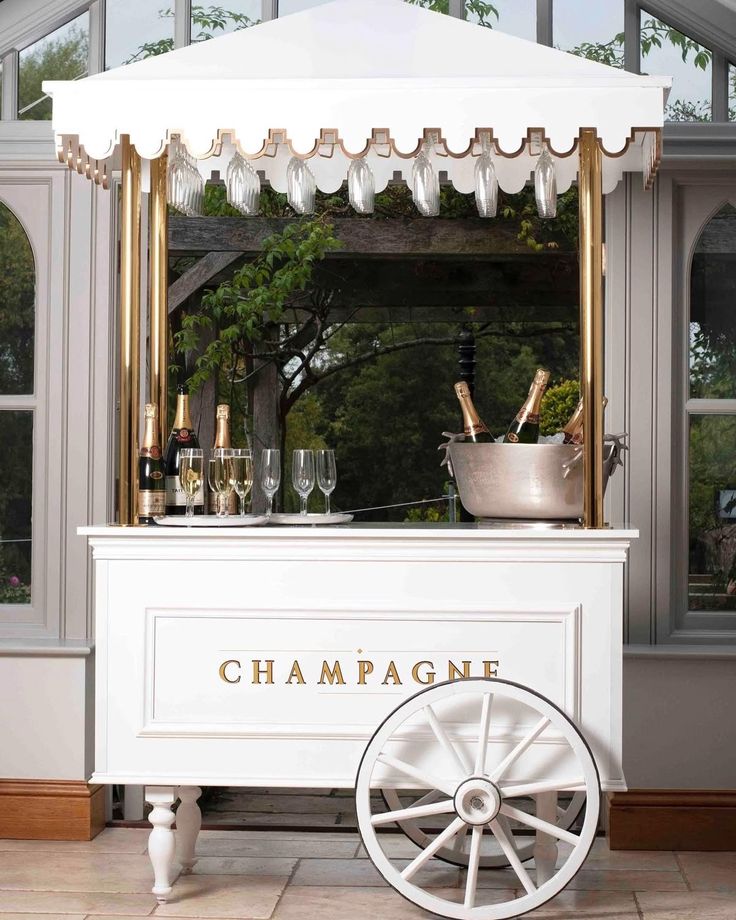
An old style cart with wheels gives off a relaxed, retro kind of feel. These work really well for garden or outdoor weddings.
6. The Vintage Truck Bar
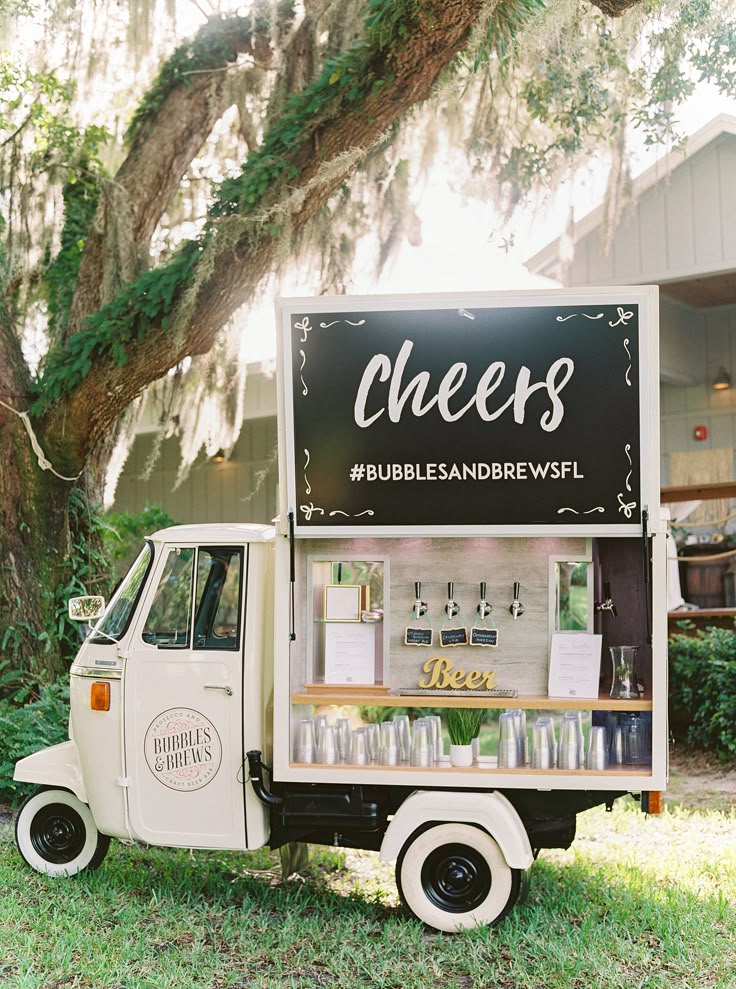
Some couples go all in and rent an actual truck or trailer turned into a working bar. It’s a bigger commitment for sure, but guests always talk about it after.
7. The Rustic Wood Bar
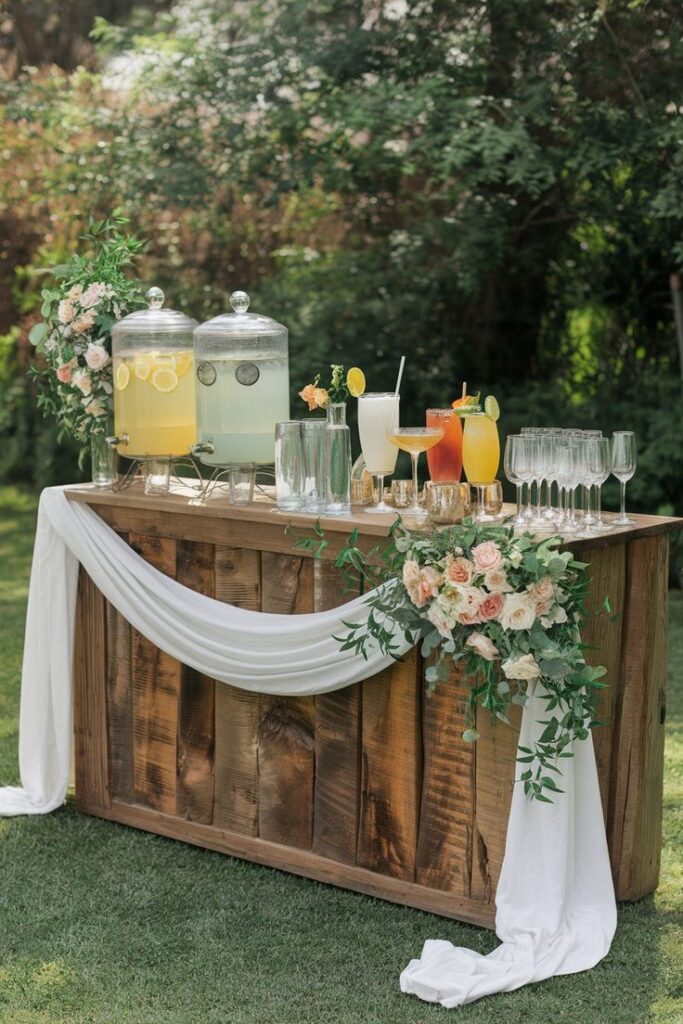
A simple wood counter with a natural finish fits barn weddings and outdoor venues really well. It doesn’t need a ton of extra decoration since the wood does most of the work on its own.
8. The Luxury Bar
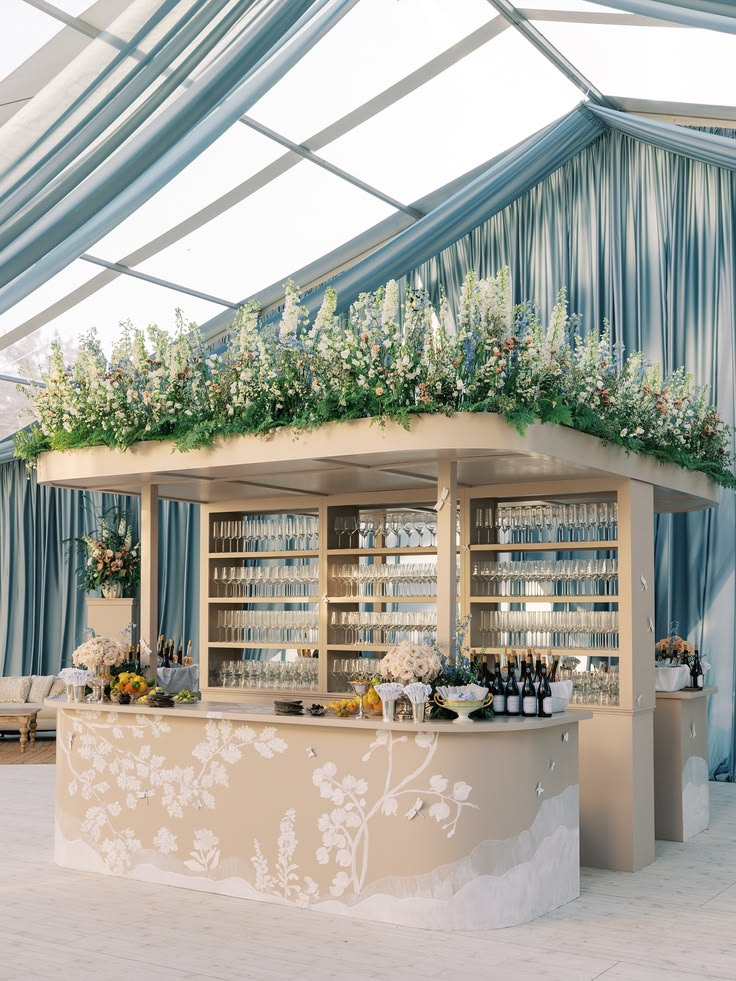
For a more formal wedding, think dark wood or marble with some gold trim. This one usually works best indoors, somewhere that already has a polished look going on.
9. The Boho Bar
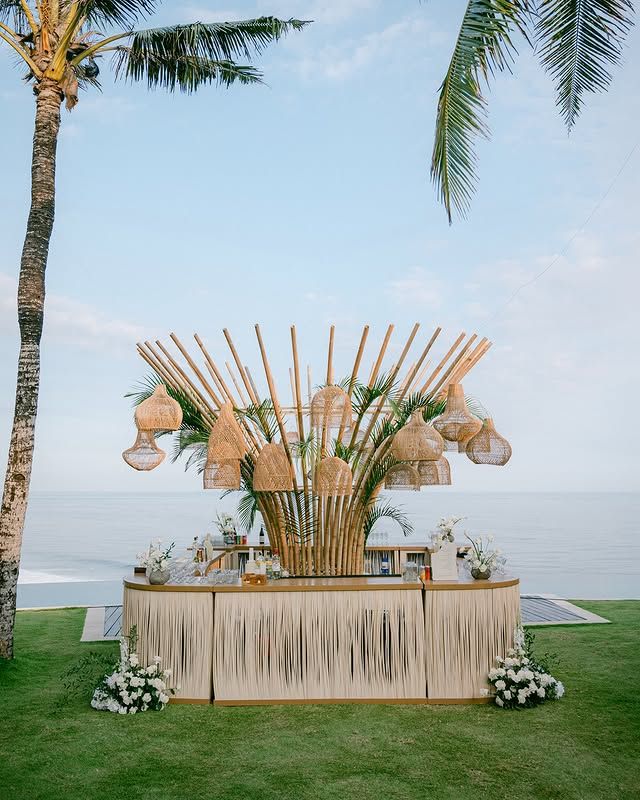
Macrame hangings, dried flowers, a mix of natural textures. This style goes really well with earthy color palettes and outdoor settings.
10. The Beach Bar
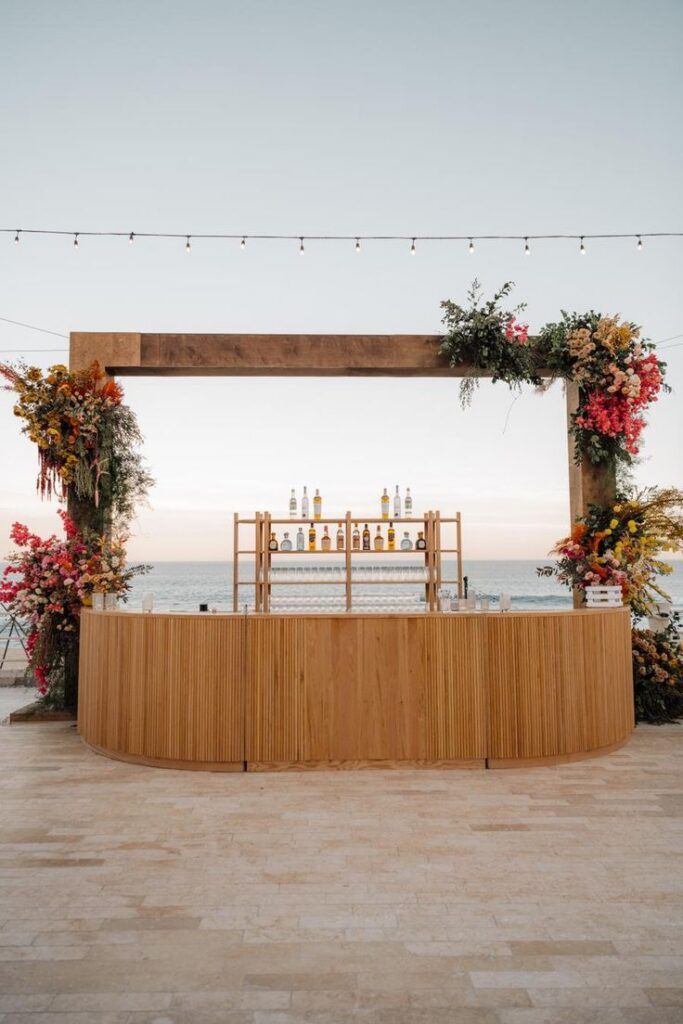
Light colored wood, a bit of rope detail, some greenery. Keeps the bar feeling like it belongs at a beach wedding instead of looking out of place.
11. The String Light Bar
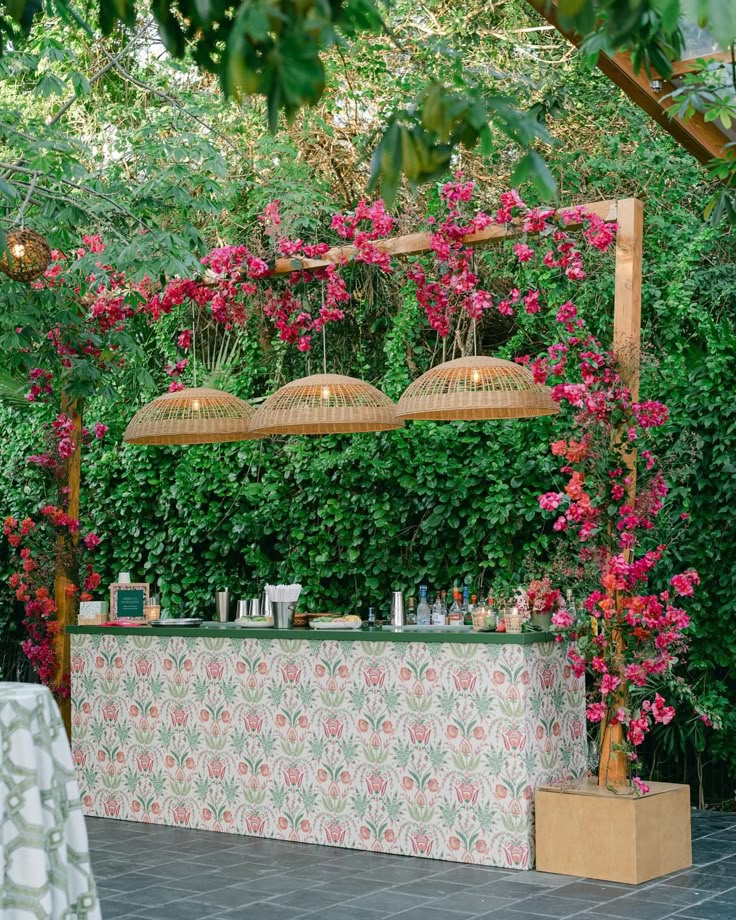
Just a classic. String lights above or around the bar make it feel warmer once it gets dark out. Affordable and it works at almost any wedding.
12. The Built-In Lit Bar
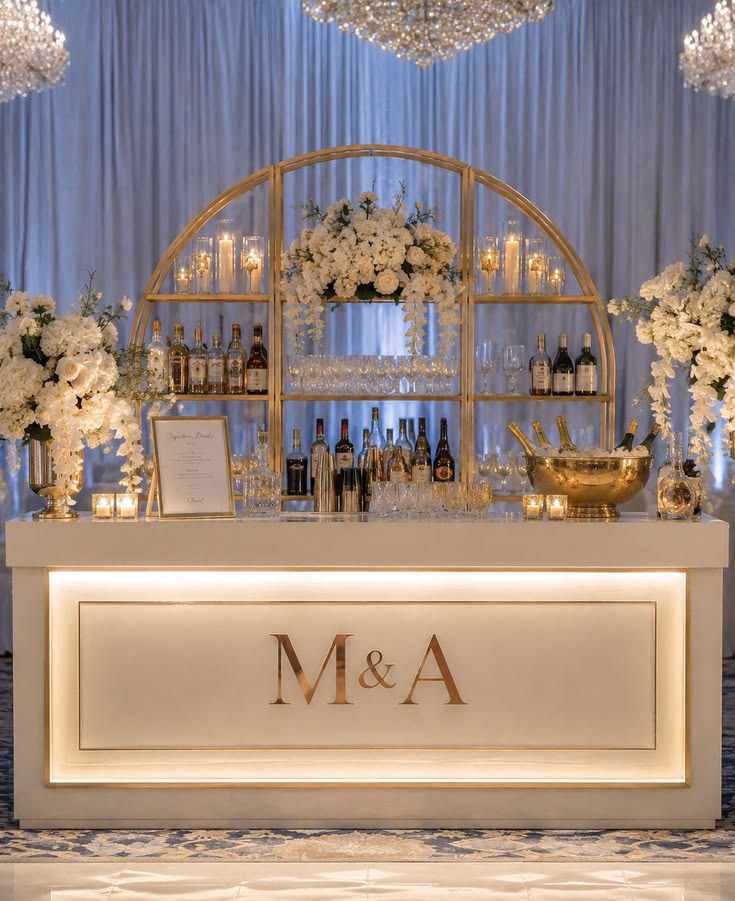
This one doesn’t really show up on most wedding sites. Instead of stringing lights around the outside, some bars now have lighting built straight into the counter panel itself. It looks a lot cleaner with no wires hanging around, and it holds up better through a long night than decorative lights that can come loose. A bar like this usually comes from a design-build team since the lighting gets planned into the structure itself, not added on after.
Planning a Custom Bar for Your Venue?
VenueTransform designs and builds custom bar counters and mocktail counters for banquet halls, event venues, ballrooms, hotels, and resorts. Get a bar designed around your space, guest flow, and interior style.
Contact Us Call (559) 420-022813. The Floral Wrapped Bar
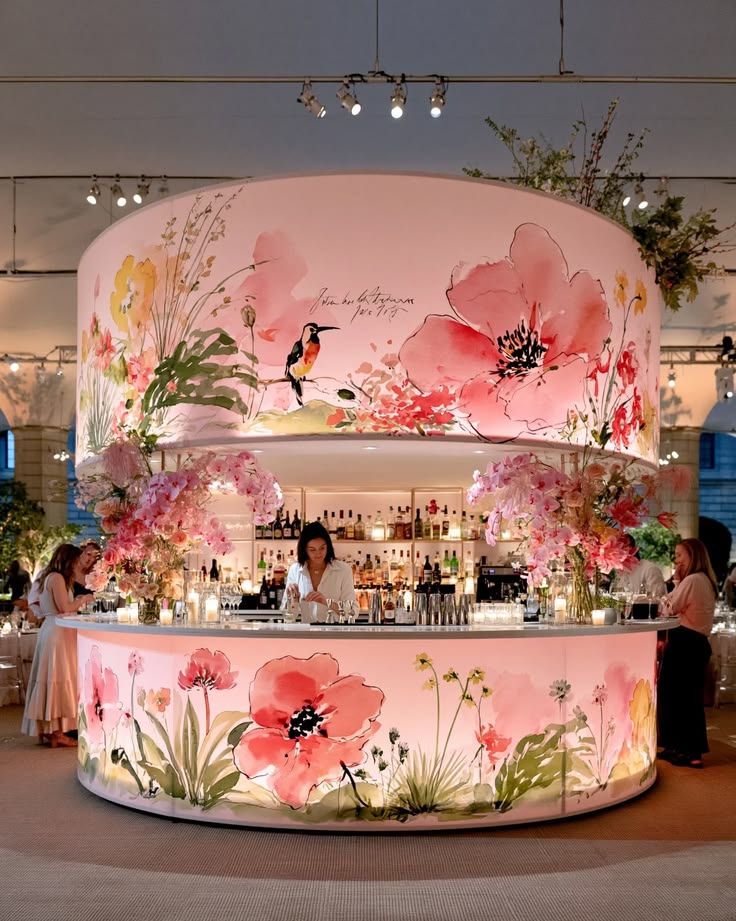
A garland wrapped around the edge, or just a few arrangements sitting on top, adds a soft touch without costing much at all.
14. The Open Back Bar
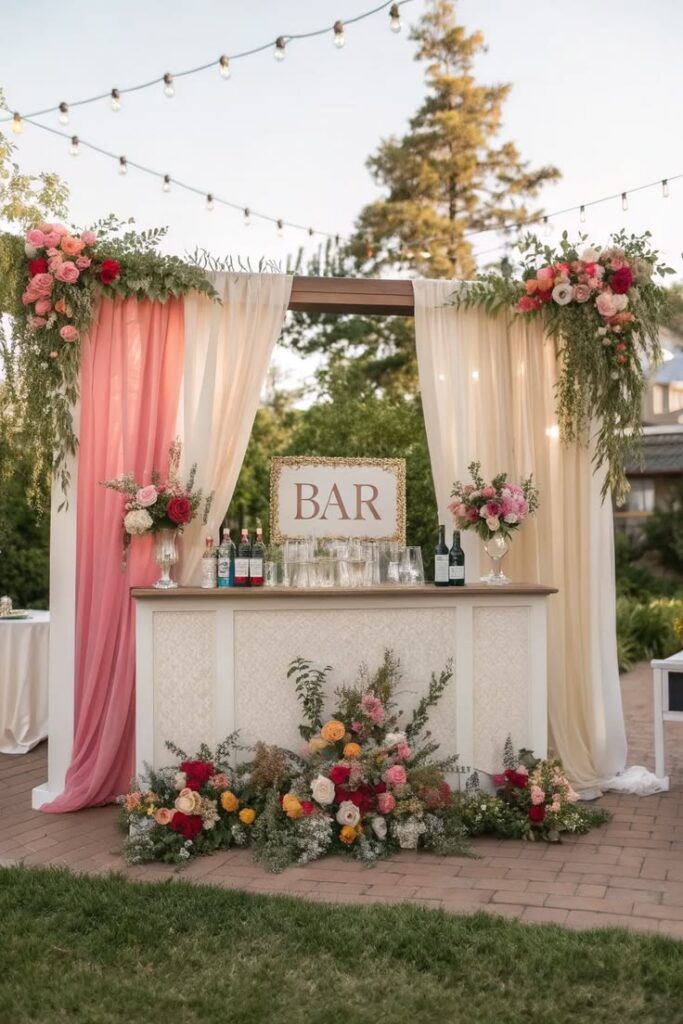
If your venue has a nice view, water, a garden, whatever it is, keep the bar low or open backed so people can still see past it. A tall boxy bar in the wrong spot can block the one thing you picked the venue for in the first place.
15. The Coffee Bar
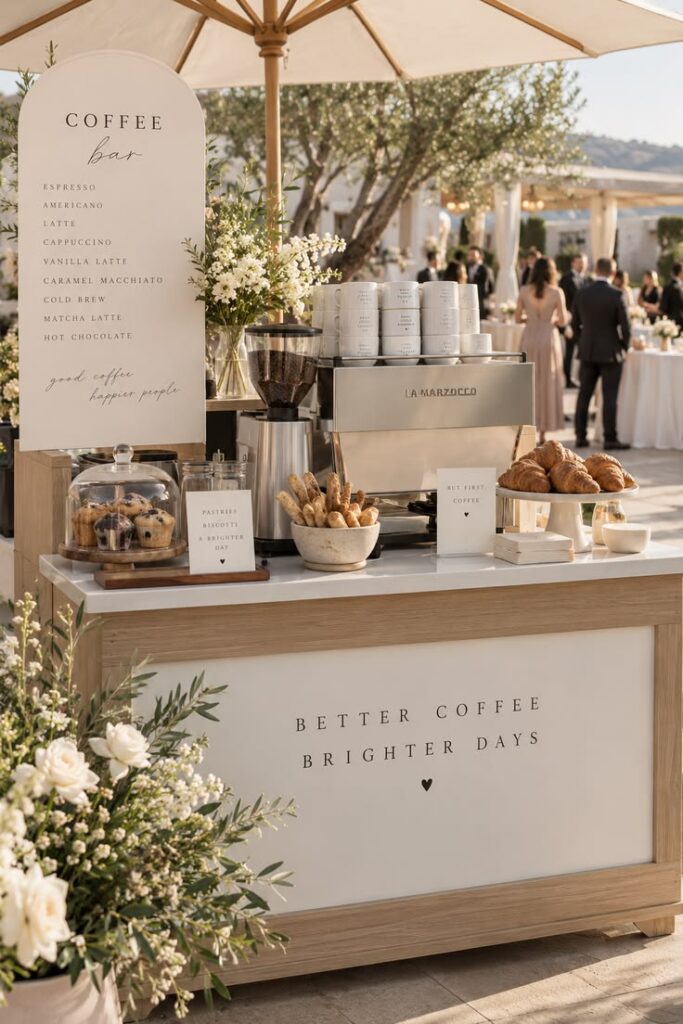
Not everyone’s drinking all night. A small coffee cart off to the side gives guests something else to do that isn’t just standing in the drink line.
16. The Dessert Bar
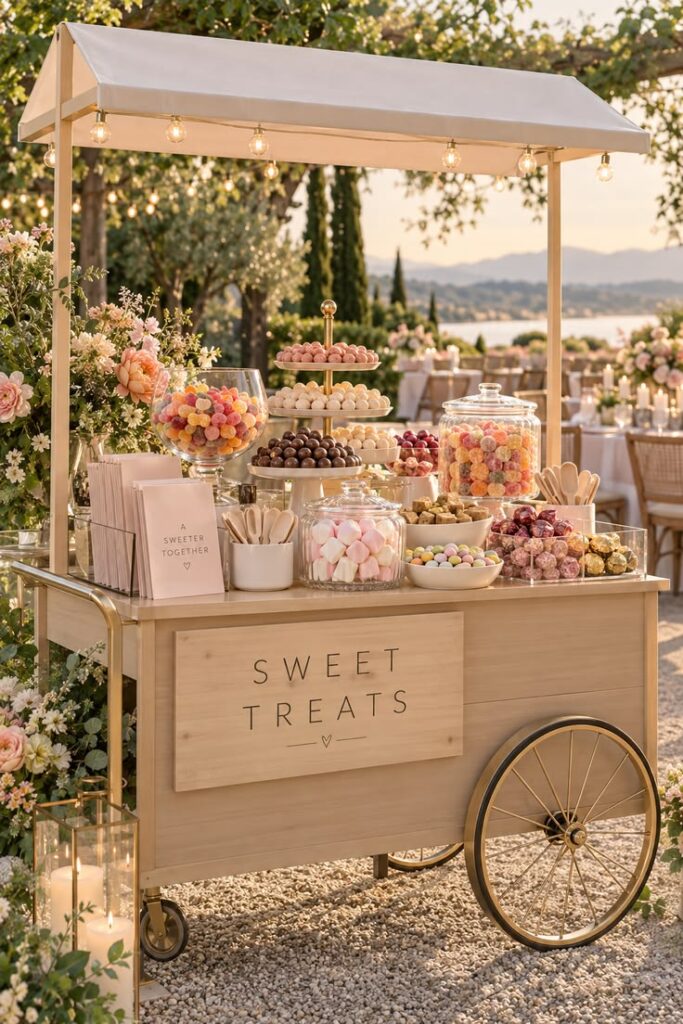
Same idea as the coffee bar, just with sweets instead. Works well set up close to the main bar so people naturally wander between the two.
17. The Mocktail Bar
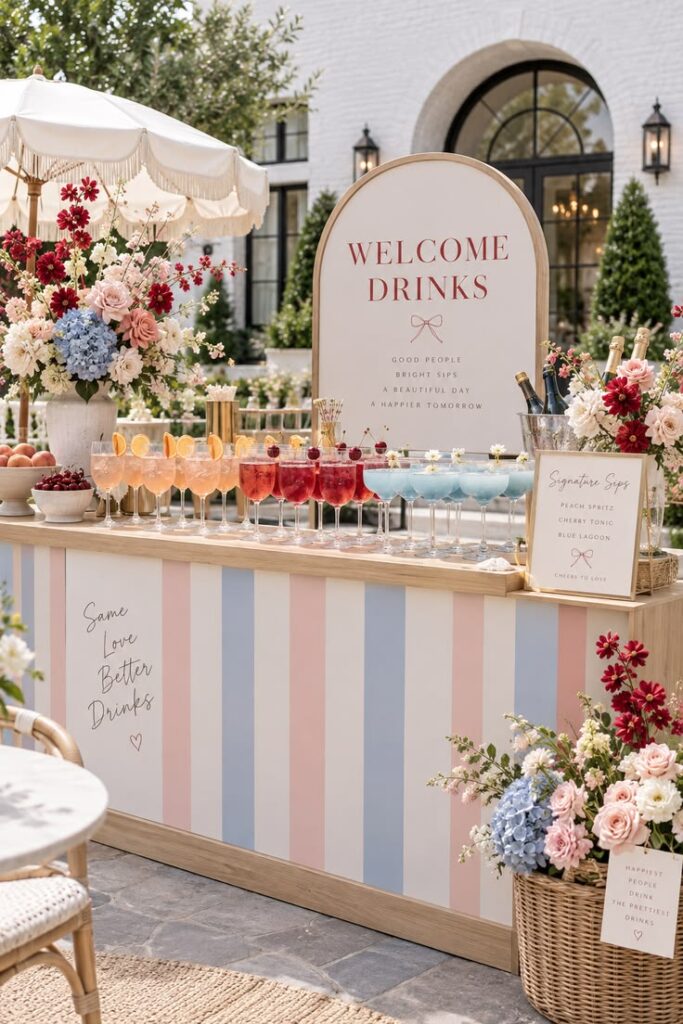
More weddings are doing a dedicated mocktail station now, either right next to the main bar or on its own little table. Guests who aren’t drinking still get something that feels special instead of just water.
18. The Matched Interior Bar
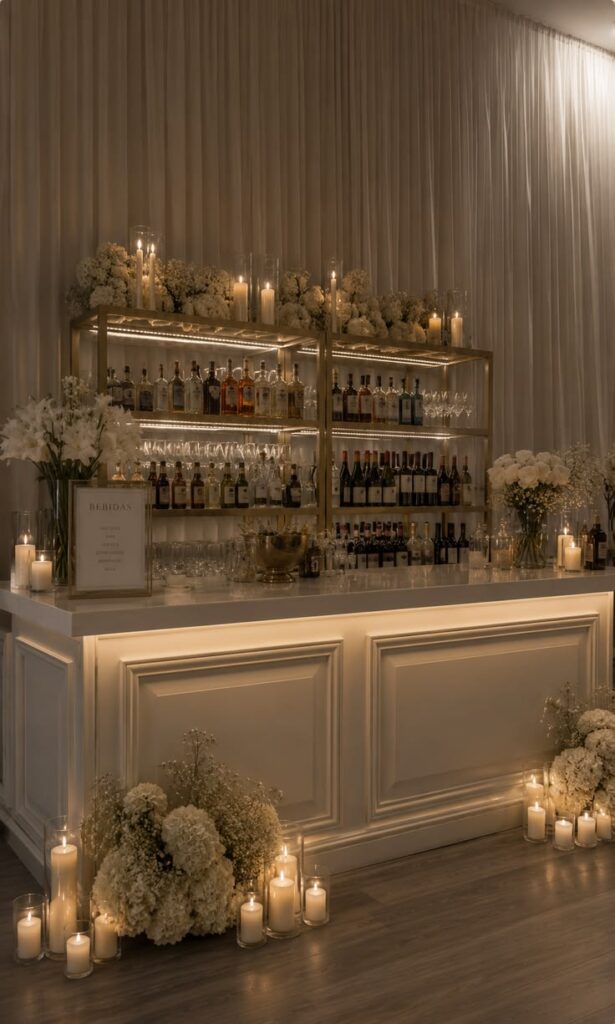
If you’re in a banquet hall or ballroom, the bar doesn’t have to be some random standalone piece. Matching its finish to the room’s existing wood tones or wall panels makes the whole space feel planned out instead of thrown together.
19. The Simple Outdoor Bar
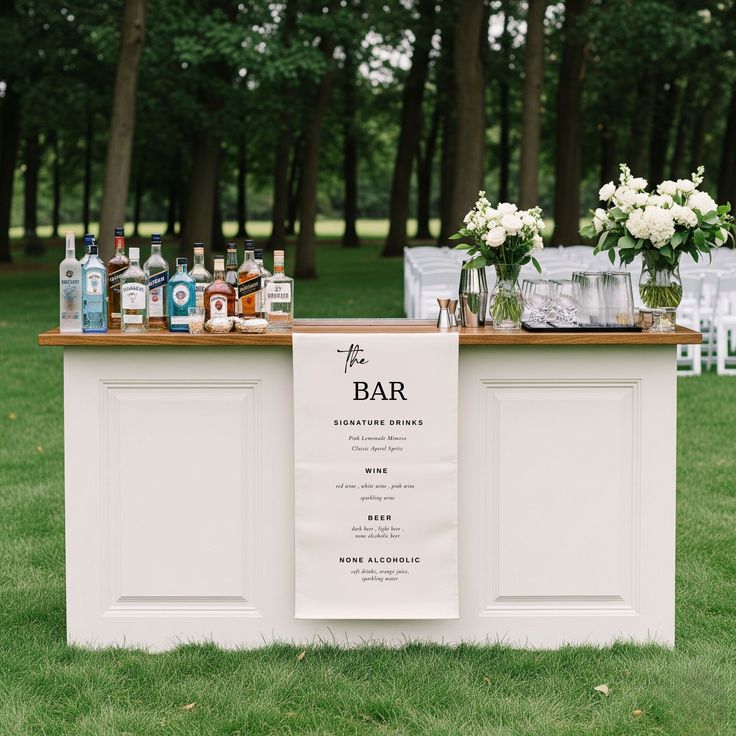
For outdoor weddings, a basic wood bar with some string lights and a little greenery usually does the job. You really don’t need much more than that.
20. The Mirrored Bar
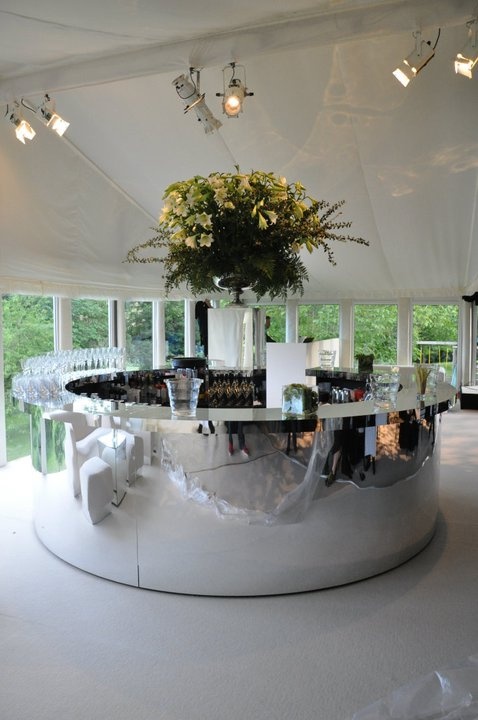
A mirror behind the bar bounces back whatever lighting you’ve got going and makes the whole setup feel bigger and brighter. Works especially well indoors.
21. The Ice Luge Bar
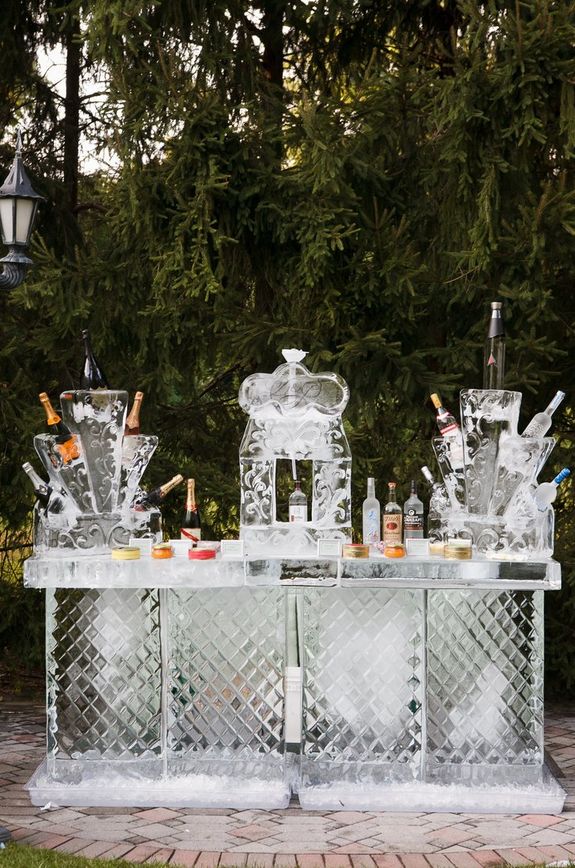
A bit old school but still fun. An ice luge for shots or a specific drink gives guests something to gather around and talk about.
22. The Self Serve Bar
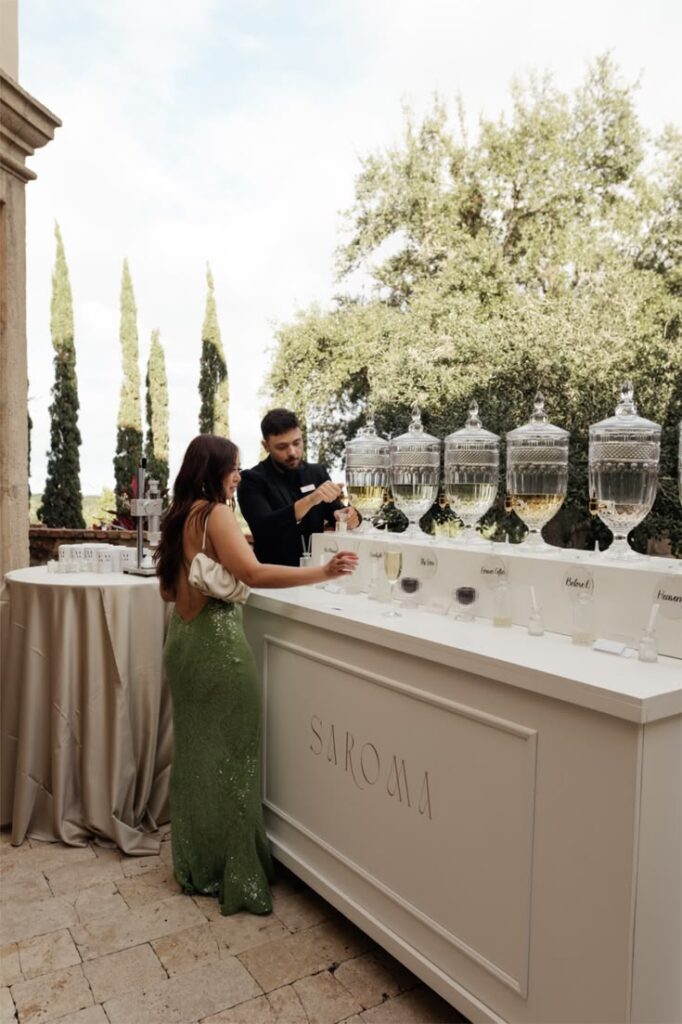
Set out a few bottles, some mixers, and basic instructions so guests can pour their own. Works great for smaller or more casual weddings where you don’t need a full bartender setup.
23. The His and Hers Bar
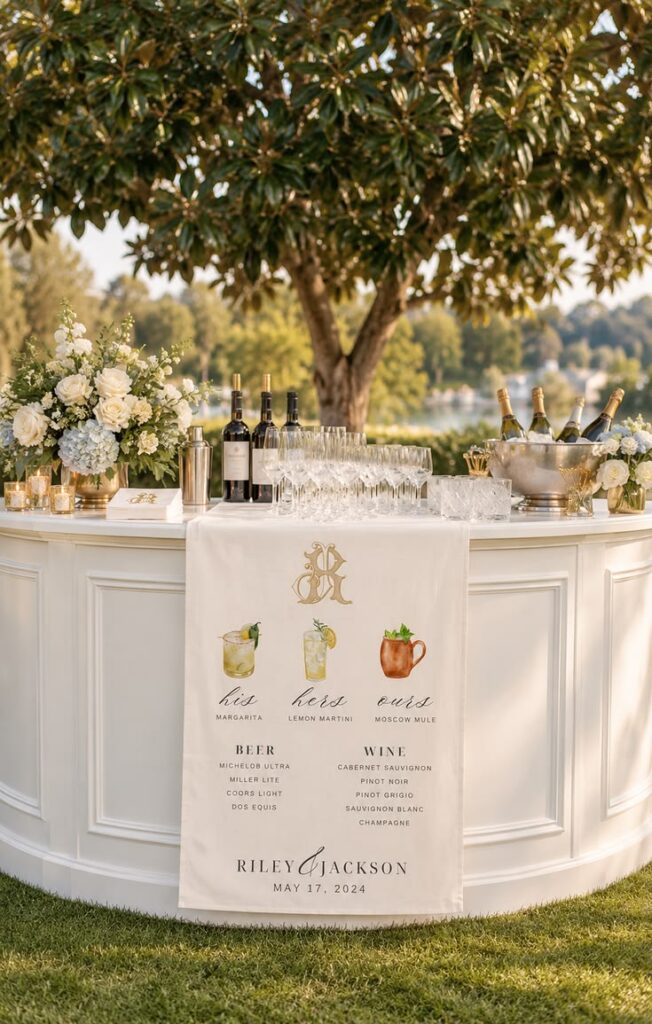
Two separate small bars, each one themed around a different drink or style the couple likes. Gives guests more to look at and splits up the crowd a bit too.
24. The Flow Friendly Bar
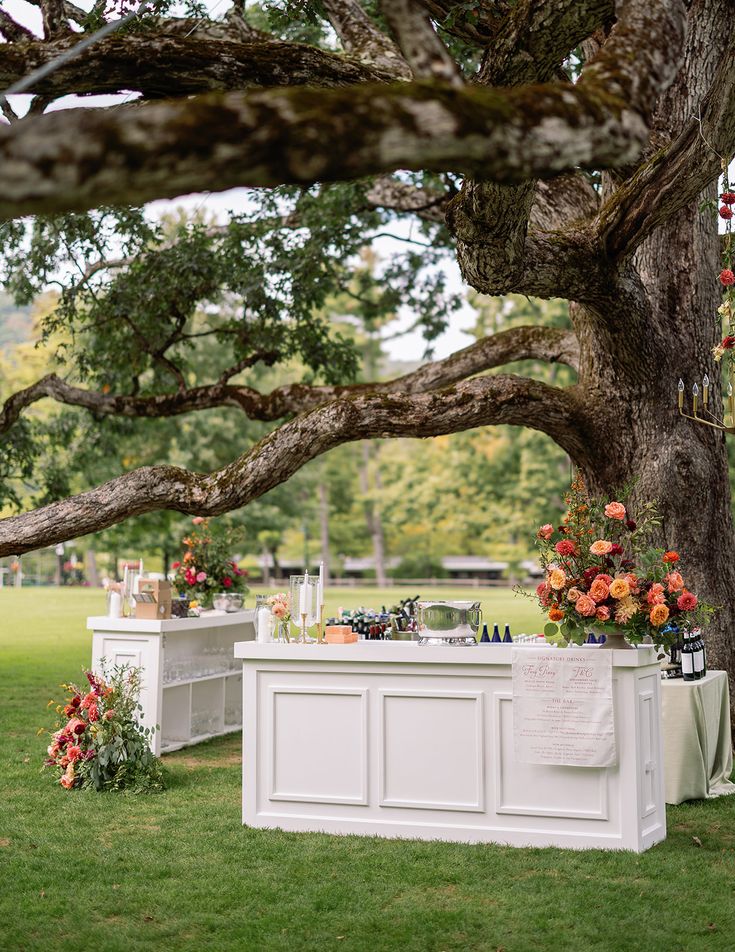
This matters more than people think. Where you put the bar changes how guests move through the whole venue. Too close to the dance floor and it gets crowded fast. Not enough space around it and the line backs into a walkway. Worth thinking through before picking a spot, not after.
25. The Permanent Built-In Bar
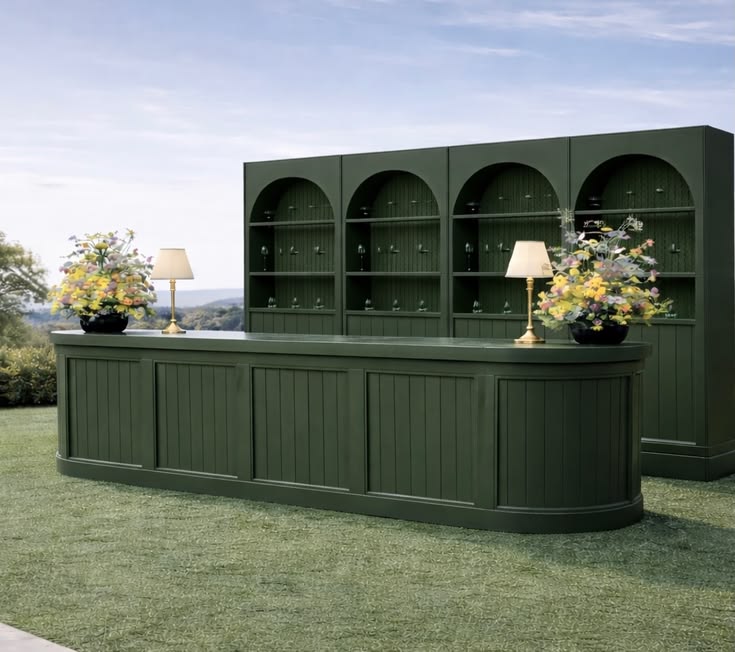
A rented bar works fine for one night. But if you’re a venue hosting events regularly, a built-in counter holds up a lot better over time and looks sharp every single time, without needing to be rebuilt or rented again for the next event.
How to Pick a Bar Style That Actually Fits Your Venue
Most lists just show you pretty pictures and leave you to figure out the rest. Here’s a quick way to narrow it down based on where you’re getting married.
If you’re outdoors or at a barn venue, rustic wood or vintage cart styles usually fit best. If you’re in a ballroom or banquet hall, go with something that matches the room, like a matched interior bar or a mirrored setup, since those spaces already have a finished look you don’t want to clash with. Beach weddings do better with lighter wood and open layouts so the view isn’t blocked. And if your guest count is over 150, seriously think about a double or four sided bar no matter what style you pick, because a single bar at a big wedding means a long line all night.
How Many Drinks and Bartenders You Actually Need
A good rule most planners use is about 1 drink per guest per hour. So for a 5 hour reception with 100 guests, you’re looking at around 500 drinks total, give or take. For bartenders, plan on 1 bartender for every 50 to 75 guests if you want the line to actually move. Under that ratio and people start waiting too long, which kills the mood fast.
If you’re doing a double sided bar, you still need enough staff on both sides, it’s not a shortcut around hiring more bartenders.
Questions to Ask Your Venue Before You Pick a Bar Style
A lot of couples pick their dream bar style first and then find out the venue can’t actually support it. Ask these before you commit to anything:
Does the venue allow outside bar vendors, or do you have to use their in house bar?
Is there an existing bar counter you’re required to use, or can you bring in your own setup?
How much space is actually available for the bar, measured, not guessed?
Is there power access nearby if you want lighting built into the bar itself?
What’s the policy on alcohol service, does the venue need a license or do you need to provide one?
Getting these answers early saves you from falling in love with a bar style your venue literally can’t allow.
What a Wedding Bar Setup Usually Costs
Costs swing a lot depending on whether you’re renting for one night or working with a venue that has something built in already. A basic rented bar with minimal decor can run a few hundred dollars. A styled bar with custom decor, signage, and florals climbs higher from there. A built-in counter, the kind a venue installs permanently rather than renting each time, costs more upfront but means the venue never pays a rental fee again for future events. If you’re a couple renting a space, this part isn’t really your decision, but it’s worth knowing if you’re comparing venues and one already has a nice built-in bar versus one that charges extra for a rental every time.
Timing Your Bar Setup
Most bars go up during the same window as the rest of the reception setup, usually a few hours before guests arrive. If you’re adding something more involved, like a built-in lit counter or a full themed setup with a lot of decor, talk to your venue about setup time well in advance. Rushing this part is how bars end up looking thrown together instead of planned.
FAQ’s – Frequently Asked Questions
What should be on a wedding reception bar menu?
Most bars keep it short, usually beer, wine, a couple cocktails, and one signature drink. A shorter list means the bartender moves faster through the line.
What are some unique wedding bar ideas?
A vintage truck bar, a built-in lit counter, or a four sided setup for bigger guest counts all stand out more than a standard rental bar.
How much space do you need for a reception bar?
Depends on your guest count, but the real factor is how people move around it, not just the size of the bar itself. For bigger weddings, a double or four sided setup helps keep the line from backing up into other parts of the room.
Should the wedding bar match the venue’s design?
It helps. A bar that matches the room’s wood tones or wall finishes usually looks more put together than something that feels dropped in on its own.