How to Choose Wall Panels for a Banquet Hall
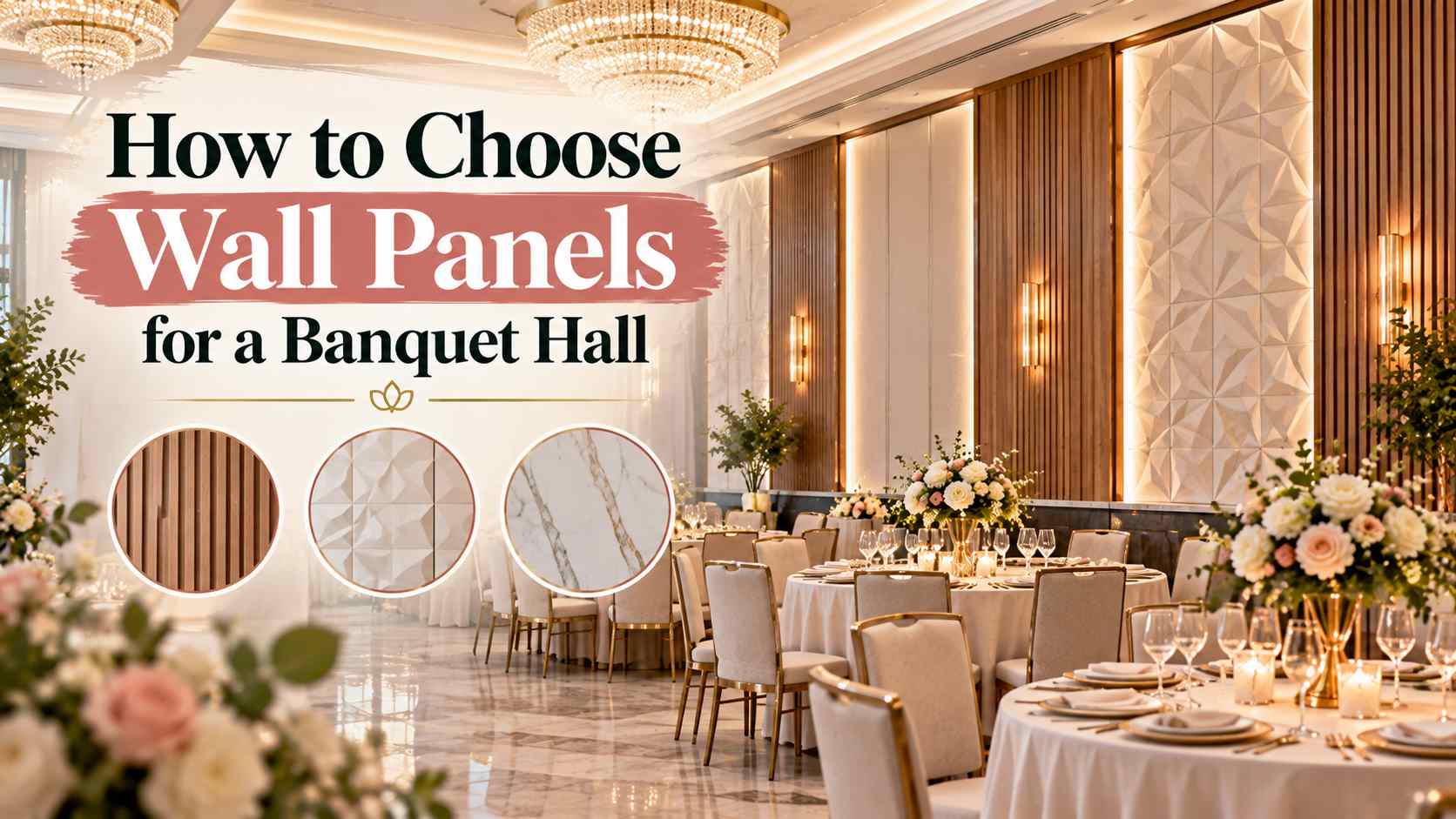
Walls are one of the first things guests notice in a banquet hall. They’re also one of the first things to look tired. Chairs bump them, bags scrape them and decorations get taped up and pulled off all the time. Plain paint can’t keep up for long. That’s why a lot of hall owners across the USA are switching to decorative wall panels. But picking the right ones takes a little thinking. This guide goes through what to check so you don’t end up with panels that look great on day one and rough by month six.
TL;DR
Key Takeaways
- Quick Answer: Wall panels look better than paint and hold up better in busy banquet halls.
- Plan First: Measure your walls and plan the layout before picking a style.
- Materials: Pick materials for how the wall is used, not just how it looks.
- High Traffic Spots: Use tougher finishes near the entrance, bar and buffet.
- Custom vs Standard: Custom panels fit odd walls and special looks better than standard ones.
- Installation: Good installation matters as much as the panel itself.
Why Wall Panels Matter in a Banquet Hall
A banquet hall hosts a lot of people, and a lot of events. Weddings, birthdays, work dinners, you name it. Every event leaves a little wear on the walls. Paint chips, scuffs show up and touch ups never match perfectly.
Wall panels fix a few problems at once. They add texture and depth, so the room feels finished instead of flat. They hide small bumps and uneven walls. And they hold up better, which means less repainting and less time with a section closed for repairs. Guests also take a lot of photos, and a nice panel wall makes a much better backdrop than a plain white one.
What to Consider Before You Choose
Before looking at samples, get clear on a few basics.
How is the room used? A hall that does mostly weddings needs a different look than one that does mostly business events. Weddings usually want a warm, soft feel. Corporate events can go cleaner and simpler.
What’s your budget? Panel costs depend on the material, the size of the wall and how much is custom. Get a real quote based on your actual room instead of trusting a random number online.
Which walls matter most? You don’t have to cover every wall. Start with the spots guests look at most, like behind the head table, near the entrance or around the bar.
What does your building allow? Commercial buildings have rules about fire ratings and materials, and they can change by city and state. Ask about this early so you don’t have to take something down later.
Wall Size and Layout
Measure first. Get the height and length of each wall, and note doors, windows, outlets, vents and corners. These all change how panels fit. A wall with lots of interruptions needs more cutting and planning than a clean, flat one.
Think about proportions too. Big, bold panels can feel great on a tall wall but too heavy on a short one. Narrow panels or vertical lines can make a ceiling feel higher. Wide horizontal patterns can make a narrow room feel wider.
Also think about where the panels sit in the layout. A feature wall behind the stage or the head table gets seen by everyone, so it can take a more detailed design. A wall near the buffet or bar gets bumped more, so go for something tougher over something delicate.
Materials and Finishes
Here are the common options and where each one fits.
Wood and wood veneer gives a warm, upscale look. It works well behind the head table or in quieter areas, but it needs more care around water and heavy bumps.
Laminate panels come in lots of colors, wood looks and stone looks. They wipe clean fast and cost less than real wood, so they’re popular for busy halls.
3D textured panels have raised patterns that catch the light. They make great feature walls, though deep textures can hold dust, so ask how they get cleaned.
Acoustic panels help soak up noise. Big halls can echo, and conversations get hard to hear. These help with comfort, and many look nice too.
Metal accents add a sleek, modern touch. They’re tough, but fingerprints can show, so they often work best as trim or small accents.
Whatever you pick, ask how it handles cleaning, spills and scuffs. Your staff will deal with it every week, so easy to wipe finishes save time.
High Traffic Areas
Some spots in a hall take way more abuse than others. Think about the walls near the entrance, the buffet, the bar, the restrooms and the walkways where carts and chairs pass. These need tougher, more scratch resistant panels with sealed edges.
Lower traffic spots, like a wall behind the stage, can use something more delicate and detailed since nobody’s bumping into it all night.
A good trick is to mix. Use a durable finish on the lower part of busy walls and a nicer one above. That way the part people bump stays protected, and the part people look at stays pretty.
Custom vs Standard Panels
Standard panels come in set sizes and styles. They cost less and ship faster, and they work fine for simple, straight walls.
Custom panels are made for your exact space. They fit odd corners, tall ceilings and unusual wall shapes, and you can pick the finish, pattern and size. They cost more up front, but there’s less cutting on site and fewer awkward gaps.
If your room is plain and rectangular, standard might be enough. If your hall has odd angles, high walls or a specific style you want to match, custom usually gives a cleaner result.
Installation
Even a great panel looks bad when it’s put up wrong. Gaps between panels, uneven seams, weak mounting and crooked lines make good materials look cheap.
Before you order, ask who installs the panels and how they handle corners, outlets and edges. Ask how long it takes and if the work can happen during a slow stretch, so you don’t lose bookings. A wall surface that’s bumpy or damp can also cause problems, so ask if the wall needs prep first.
Plan the lighting at the same time. Soft accent lights along a textured wall show off the depth, while harsh overhead lights can flatten it.
When Custom Panels Make Sense
Custom panels are worth a look if any of these sound like you.
- Your hall has odd corners, curves or tall ceilings
- You want a feature wall that matches your brand or style
- You’re also planning a new bar or buffet and want everything to match
- Standard sizes leave awkward gaps
- Your walls take heavy abuse and you want a tougher build
When the walls, the bar and the buffet share colors or materials, the whole room feels planned. Guests may not say why, but they notice.
Ready to Plan Your Wall Panels?
We design, build and install custom wall panels for banquet halls and event venues across the USA.
Frequently Asked Questions
Do I need to cover every wall in my banquet hall?
No. One or two feature walls can change the whole room. Start with the spots guests see most.
What material is best for banquet hall wall panels?
It depends on how the wall is used. Laminate and sealed panels work well for busy areas, while wood looks great in quieter spots.
Are wall panels better than paint?
In busy halls, usually yes. Panels hold up better to bumps and scuffs, and they add texture that paint can’t.
How do I clean wall panels?
Smooth, sealed panels wipe clean with a damp cloth. Textured ones may need a soft brush. Always ask what products are safe for your finish.
Can wall panels help with noise?
Some can. Acoustic panels soak up sound and cut down on echo in big rooms.
Should I pick custom or standard panels?
Standard works for simple, straight walls. Custom is better for odd shapes, special looks or heavy use.
How long does installation take?
It depends on the size of the job and the type of panel. Ask for a timeline before you order, and try to schedule it in your slower months.