
How to Start a Wedding Venue: Costs, Permits and Profit
If you want to know how to start a wedding venue, the plan is simple. Pick the type of venue, write a short business plan, add up your costs, find a property that allows events, and get your permits and insurance. Then set up the space, price your packages and book couples before you open. This guide walks through each step in the USA with real numbers and plain advice.
TL;DR
Key Takeaways
- Choose Your Venue Type: Pick a barn, banquet hall, historic building or outdoor space based on your budget and target couples.
- Make a Business Plan: Calculate startup costs, monthly expenses, pricing and expected bookings before investing.
- Check Zoning and Permits: Confirm local zoning rules before buying or leasing. Get the required business licenses, permits and insurance.
- Prepare Your Venue: Plan parking, restrooms, lighting, catering areas, seating, accessibility and a rain backup.
- Set Your Wedding Packages: The average U.S. wedding reception venue costs around $12,900, according to The Knot’s 2026 Real Weddings Study.
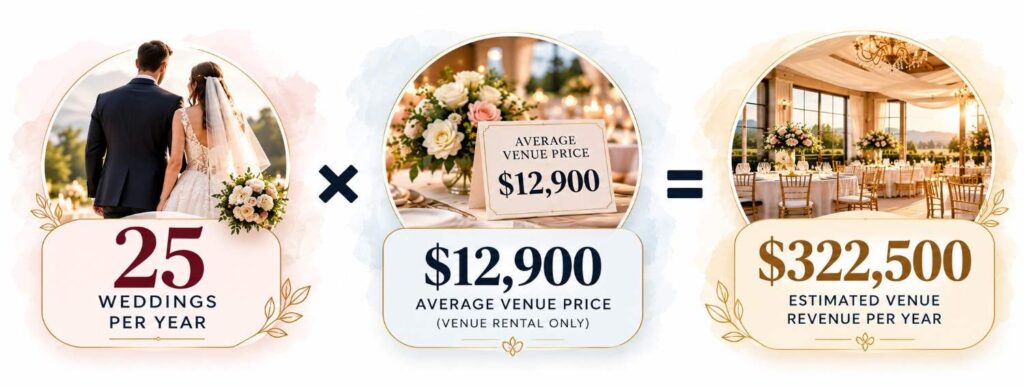
- Know Your Earning Potential: Hosting 25 weddings at $12,900 each could generate $322,500 in annual revenue before operating expenses.
- Start Marketing Early: Build a website, list your venue on wedding platforms and connect with local photographers, planners and vendors.
- Plan for Slow Months: Keep extra cash available, control expenses and focus on steady bookings to build a profitable business.
Is Starting a Wedding Venue Right for You?
Starting a wedding venue is a real business with real risk, so check yourself before you spend any money.
The U.S. Bureau of Labor Statistics tracks how long new businesses last. About one in five closes in its first year and about half are gone by year five.
Weddings happen on weekends and at night, so you will work when your friends are off. The start is slow too. Couples often book many months ahead, so you may pay rent or a loan payment for a while before your first wedding.
Ask yourself four quick questions.
- Can I afford to lose some of the money I put in?
- Can I work weekends for years?
- Can I cover a slow first year?
- Do I still get excited when I picture it running?
If you said yes four times, keep going.
What Couples Spend
The demand is real. The CDC counted about 2.13 million marriages in the United States in 2024, based on provisional numbers.
The Knot 2026 Real Weddings Study asked 10,474 couples who married in 2025 what they spent. Here is what it found.
| What couples spend | Average |
|---|---|
| Whole wedding | $34,200 |
| Guests per wedding | 117 |
| Cost per guest | $292 |
| Reception venue | $12,900 |
Size matters too. The same study says weddings with more than 100 guests averaged $43,300, while weddings with 51 to 100 guests averaged $27,200. That is a good reason to build a space that can host a bigger crowd. Prices also change a lot by state, the Knot found averages from $17,000 in Wyoming to $57,000 in New Jersey, so check what couples pay near you.
Wedding Venue Start Up Costs: What to Budget For
Your start up cost depends on one choice more than any other. Do you lease a ready space, convert land you already have, or build from scratch?
No public source gives one fair price, because land, building and labor change by state and city. So build your own number from local quotes. This table shows what to price and who to ask.
| Cost area | What it covers | Where to get a real number |
|---|---|---|
| Property | Rent, purchase or construction | A local commercial agent or builder |
| Repairs and renovation | Roof, floors, wiring, plumbing | Three contractor quotes |
| Permits and fees | Building, zoning, business license, occupancy | Your city or county planning office |
| Insurance | Property, general liability, workers’ comp, liquor if you serve | Two or three insurance brokers |
| Kitchen, restrooms, parking, lighting | What guests and caterers need on the day | A caterer and an electrician |
| Furniture and fixtures | Tables, chairs, bar counter, buffet counter, wall panels | Supplier quotes |
| Website, photos and marketing | Photo shoot, website, listings, ads | A photographer and a web designer |
| Cash cushion | Rent, pay and bills during the slow first year | Your own 12 month cash plan |
Old buildings hide problems, so keep extra money aside for surprises.
The good news is that these costs can often be financed. The U.S. Small Business Administration says its 7(a) loan program can help pay for real estate, building improvements, furniture, fixtures and supplies. You apply through a lender, not through the SBA.
How to Start a Wedding Venue Step by Step
Follow these eight steps in order, from picking your venue type to your first booking.
Step 1: Pick Your Venue Type
Think about the couple you want before you look at buildings. These are the common choices.
- Barn or farm. Popular and great in photos. Often zoned for farming so you may need special approval.
- Historic building. Lots of charm but old plumbing and wiring.
- Banquet hall or ballroom. Built for crowds and usually easier on permits.
- Backyard or estate. Cheap to start but you have to plan parking, restrooms and noise.
- Rooftop or loft. Good for city couples with smaller guest lists.
Read the reviews of venues near you. If you see the same complaint again and again, like bad food or tight parking, you just found a gap you can fill. For more style ideas, look at these wedding venue ideas.
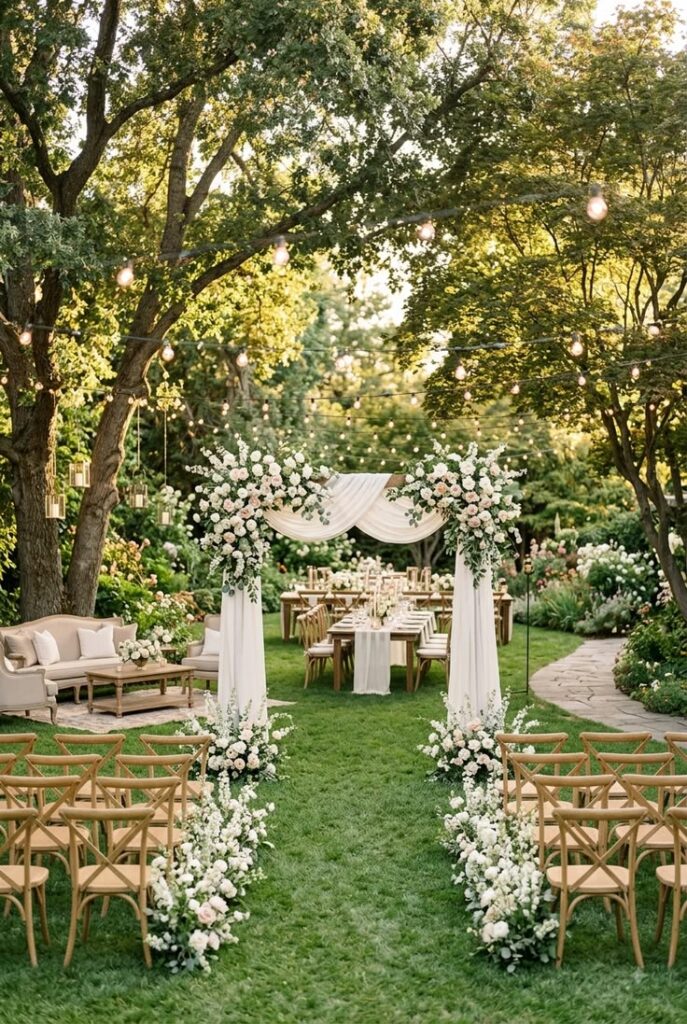
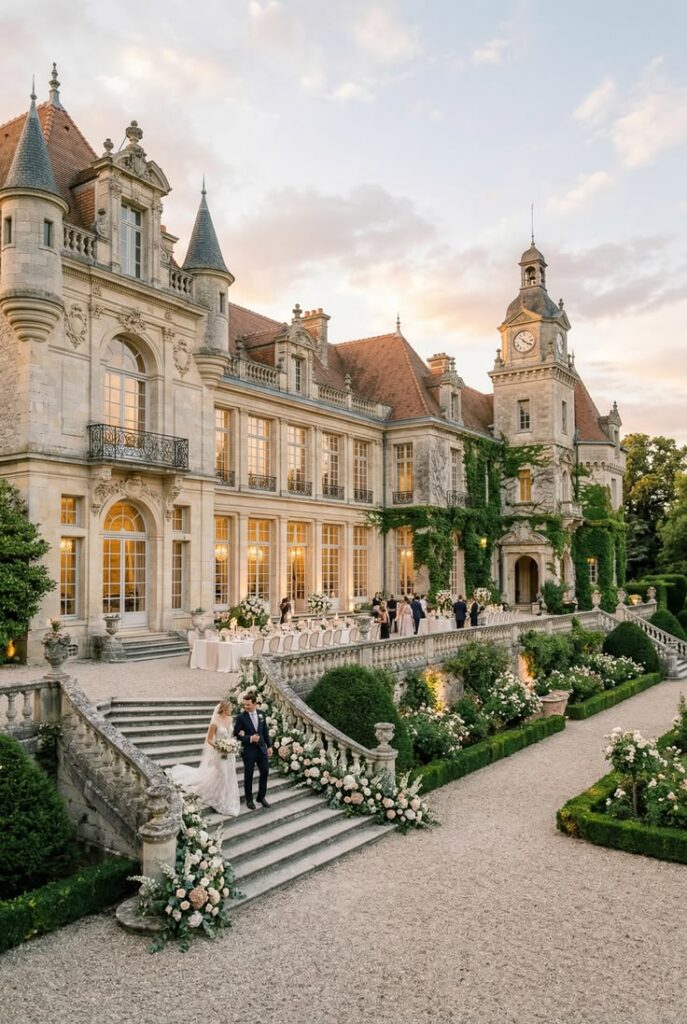
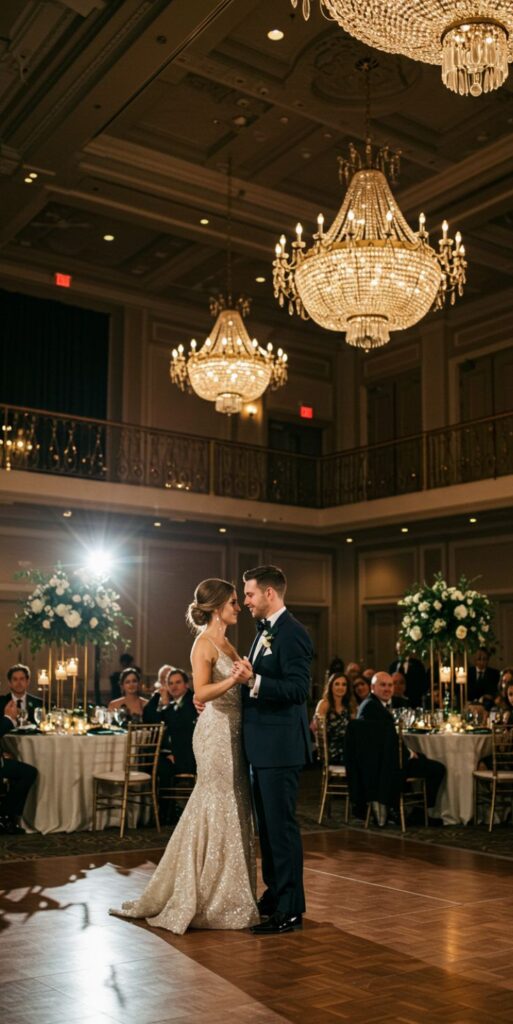
Step 2: Write a Wedding Venue Business Plan
A wedding venue business plan doesn’t need to be 50 pages. A short and honest one keeps you focused and helps if you ask a lender for money. Cover these parts.
- Who your venue is for
- What you will sell
- What it costs to open and to run each month
- Who you will hire
- How you will find couples
- A 24 month cash plan
Many people search for a wedding venue business plan PDF to copy. A free template is a fine start, but fill it with your own numbers.
This is also where you pick your business model. Some venues only rent the space. Others sell all-inclusive packages with food, drinks and decor. The more you include, the more you can earn per wedding, but the more you have to run.
Step 3: Lease, Buy or Build
Opening a wedding venue can happen three ways.
- Lease. The cheapest way in. Ask for a two year lease, because one year is too short to build up bookings. Look for a building that is already zoned for business so you skip the county process of changing it.
- Buy. You own it, but you need more cash up front.
- Build. You get full control and you pay the most.
Check the zoning before you sign anything. It is the most common and most costly mistake new owners make.
Step 4: Get Your Wedding Venue Permits, Zoning and Insurance
Every city and county is different, so call your local planning office early. These are the usual items.
- Business license
- Zoning approval or a conditional use permit
- Building permits
- Certificate of occupancy
- Food permits if you serve food
- Liquor license if you sell alcohol
- Noise and parking rules
For insurance, plan on property coverage, general liability and workers’ comp. If alcohol is served, ask about liquor liability. Get a certificate of insurance from every vendor, from the caterer to the DJ.
Many venues let a licensed caterer or bar company handle the alcohol, but check what your state allows. If you sell it yourself, plan for the wait. In Texas, for example, the Texas Alcoholic Beverage Commission needs approvals from the city, the county, the Secretary of State and the Comptroller. A complete application takes about 30 to 35 days and a license lasts two years.
Step 5: Set Up the Space
This is where a venue wins or loses, because a pretty room that works badly loses bookings. For more on design, read our commercial interior design guide.
- Talk to a caterer first. Talk to at least two caterers before you build. They will tell you how big the kitchen should be and where cocktail hour should go.
- Layout. Plan how guests move from the ceremony to cocktails to dinner. Keep the dance floor away from the quiet tables and the bar away from the front door.
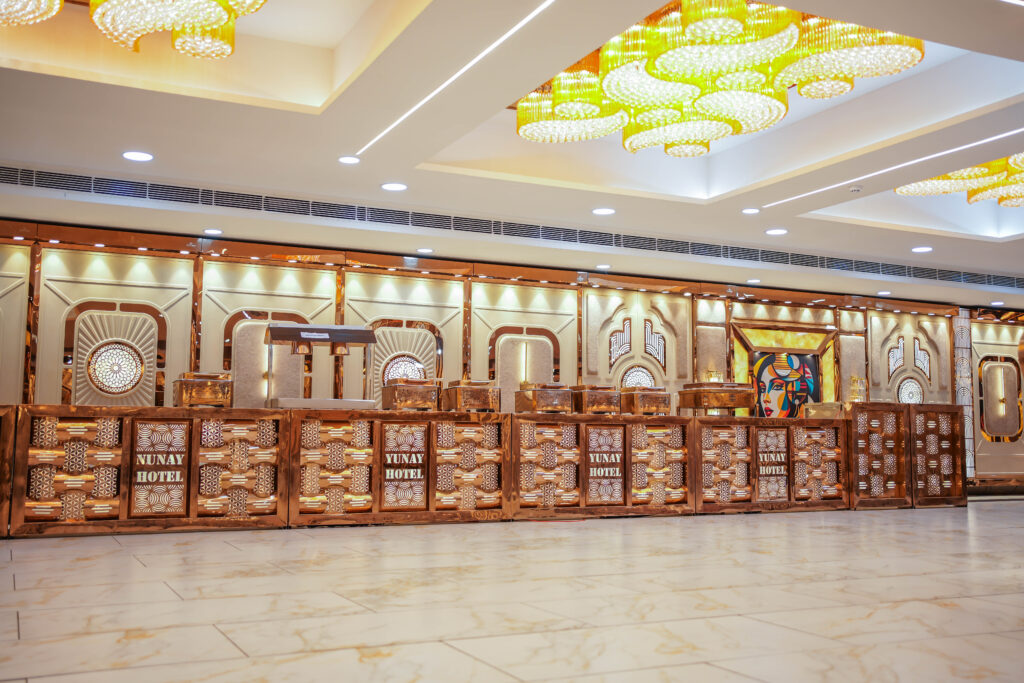
- Bar counter. A good bar spreads out the crowd and looks great in photos. A bar counter made for events should be easy to clean and quick to serve from.
- Buffet counter. A buffet counter with room for two lines keeps food moving and waits short.
- Wall panels. Wall panels cover a plain wall and give couples a photo backdrop without a big remodel.
- Lighting. Visit your space at night. Guests need safe paths and soft light for pictures.
- Restrooms and parking. Old buildings rarely have enough restrooms for 100 or more guests, so add some or rent trailers. The average wedding has 117 guests, so plan parking for that many people plus staff and vendors.
- Getting ready rooms. Give the couple two private rooms to get ready in, set far apart.
- A rain plan. Have a backup room or a tent that fits your full guest count.
Setting Up Your Venue?
We design, build and install custom bars, buffets and wall panels across the USA.
Access matters too. The U.S. Department of Justice says almost all businesses that serve the public must follow the ADA, and new buildings or remodels must follow the ADA Standards for Accessible Design. Those standards cover things like accessible routes, parking, doors, ramps and service counters, so plan your bar and buffet counters with them in mind.




Step 6: Price Your Packages
Start with the market. The Knot study puts the average reception venue at $12,900. Then call or visit venues near you and write down what each one includes, so you compare like with like.
Put as much as you can in the price. Couples feel the cost when they have to add tables, chairs and restrooms one by one. Offer about three packages and sell the extras as upgrades.
Set limits too. Say how many hours couples get for setup, the party and cleanup.
If you lease, ask for 50% down instead of four equal payments. You need cash early to cover your own rent.
Step 7: Find Couples Before You Open
You don’t have to wait for the paint to dry.
- Set up a mock wedding with local vendors and hire a photographer.
- Build a good website. Couples judge you by it.
- List your venue on wedding sites like The Knot and WeddingWire.
- Post on Instagram often.
- Offer hard hat tours and early booking prices while you build.
- Ask for reviews after every event.
- Meet other vendors. Photographers, planners and florists send couples your way.
Step 8: Hire Your Team
Start small. A venue coordinator is the first hire for most owners. Later you can add an event captain, bartenders, servers and a cleanup crew.
Keep your preferred vendor list short. Guests blame the venue when the food or music is bad, even if a vendor was the cause.
How to Start a Wedding Venue With No Money
You can’t start with literally nothing, but you can start with very little of your own money. If you searched for how to start an event space business with no money, these are the real options.
- Lease first. It lowers your risk and lets you prove the business before you borrow big.
- Ask about seller financing. Some owners who want to sell will finance the deal themselves. It is rarely advertised, so ask people in your network quietly and politely.
- Rent instead of buy. Tents, tables, chairs and decor can all be rented from event companies.
- Take deposits early. Booking couples before you open brings cash in sooner. Keep your refund rules clear in the contract.
- Look at SBA backed loans. The SBA does not lend directly. It guarantees loans made by lenders, and its Lender Match tool can connect you with one. The lender will want to see that you can repay the loan.
- Find a partner. A partner can share the money and the weekend work.
How Much Do Wedding Venues Make a Year?
It depends on how many weddings you host and what you charge, and no public source gives a fair average income for venues.
Here is a simple example built on The Knot’s average reception venue price of $12,900. It counts venue rental only, so it leaves out money from food, drinks and extras if you sell them.
| Weddings per year | Venue revenue at $12,900 each |
|---|---|
| 15 | $193,500 |
| 20 | $258,000 |
| 25 | $322,500 |
| 30 | $387,000 |
That is revenue, not profit. After staff, upkeep, insurance, taxes and loan payments you keep much less. Build your own cost numbers before you trust any income claim, including this one.
Season matters too. The Knot found that weddings in July to September cost $35,400 on average, compared with $33,200 in January to March. So plan for a busy season and a slow season.
Are Wedding Venues Profitable?
They can be, but not right away. Profit comes from steady bookings, fair prices and tight control of costs. Weekday events, corporate parties and photo shoots can fill the empty days. If you are asking if owning a wedding venue is profitable, the honest answer is yes for some and no for others. Your plan decides which one you are.
Pros and Cons of Owning a Wedding Venue
Owning an event space isn’t for everyone. Here is the honest list.
Pros
- Strong demand from couples who spend a lot on the venue
- Many ways to earn from rental, packages, the bar and extras
- You build an asset you may own
- People remember your work for years
Cons
- High start up cost
- A slow first year
- Weekend and night work
- Lots of rules, permits and insurance
- Heavy wear and constant upkeep
- Income that swings with season and weather
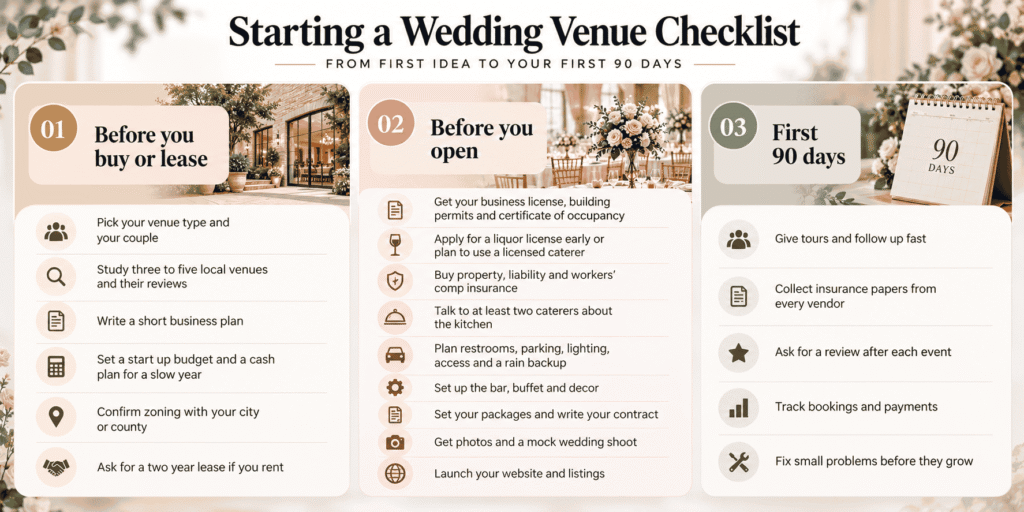
Starting a Wedding Venue Checklist
Use this list from first idea to your first 90 days.
Before you buy or lease
- Pick your venue type and your couple
- Study three to five local venues and their reviews
- Write a short business plan
- Set a start up budget and a cash plan for a slow year
- Confirm zoning with your city or county
- Ask for a two year lease if you rent
Before you open
- Get your business license, building permits and certificate of occupancy
- Apply for a liquor license early or plan to use a licensed caterer
- Buy property, liability and workers’ comp insurance
- Talk to at least two caterers about the kitchen
- Plan restrooms, parking, lighting, access and a rain backup
- Set up the bar, buffet and decor
- Set your packages and write your contract
- Get photos and a mock wedding shoot
- Launch your website and listings
First 90 days
- Give tours and follow up fast
- Collect insurance papers from every vendor
- Ask for a review after each event
- Track bookings and payments
- Fix small problems before they grow
Mistakes to Avoid
These are the mistakes that cost new owners the most.
- Signing before you check zoning. This can end the whole plan.
- Taking a short lease. You could lose couples you already booked.
- Skipping the caterer talk. Your kitchen and layout may not work.
- Too few restrooms or too little parking. Guests notice right away.
- Ignoring ADA rules. Fixing access after you build costs more than planning it.
- Letting any vendor in. A bad vendor hurts your name.
- Giving away extras. Set limits and sell upgrades.
- Cutting the website budget. Couples judge you by it.
- Planning for no slow months. Keep cash for the first year.
A design pro can save you from costly fixes. Our list of the best commercial interior design firms in the USA is a good place to start.
Final Thoughts
Starting a wedding venue business takes money, time and a lot of planning. The steps are clear though. Pick the right type, check your zoning, count your costs, set up a space that works, price your packages well and start booking early.
Take it one step at a time and use the checklist above. If you plan to open a wedding venue in the USA, make one call first. Call your local planning office. That one call tells you if your plan can work.
Frequently Asked Questions
How much does it cost to start a wedding venue?
It depends on whether you lease, convert or build, and on your state. There is no single fair number, so price each part with local quotes. The cost table above shows what to price and who to ask.
Can you start a wedding venue with no money?
Not with literally nothing, but you can start with very little of your own. Leasing, seller financing, partners, rentals, early deposits and SBA backed loans all help.
How much do wedding venues make a year?
No public source gives a fair average. As an example, 25 weddings at The Knot's average venue price of $12,900 is $322,500 in revenue, before costs.
Is owning a wedding venue profitable?
It can be, but the first year is often slow. Profit comes from steady bookings, fair prices and tight control of costs.
Do I need a liquor license to start a wedding venue?
Only if you sell alcohol yourself. Many venues let a licensed caterer or bar company handle it. Check your state rules first, like the TABC rules in Texas.
Can I turn my home or land into a wedding venue?
Maybe. It depends on zoning, noise rules, parking and permits. Call your city or county planning office before you spend any money.